
Garmin ECHOMAP UHD2 73sv Review: Inland Charts and SideVü on a 7 in Touchscreen
Our Garmin ECHOMAP UHD2 73sv review covers GT54UHD-TM sonar views and depth limits, Navionics+ inland charts, the memory card you need, and Force control.
 Updated November 1, 2026

The Garmin ECHOMAP UHD2 73sv is a 7 in touchscreen chartplotter and fish finder. This package (Garmin part 010-02684-01) ships with the GT54UHD-TM transducer and preloaded Garmin Navionics+ U.S. inland mapping. Garmin lists traditional CHIRP, ClearVü, and SideVü sonar with the included transducer, multi-band GPS, and Wi-Fi links to its ActiveCaptain app and to compatible Force trolling motors.
Our verdict: it suits anglers on U.S. lakes, from bass boats and jon boats to larger kayaks, who want lake charts on day one and side imaging on a 7 in screen. This review is based on research, not our own trials.
This guide is general product information, not repair or electrical safety advice. Follow the installation, wiring, and charging instructions in your product’s manual, stop using any battery, charger, or electronics that overheat, swell, or smell of burning, and contact the manufacturer.
We earn a commission from qualifying purchases made through links on this page. Commissions never affect our rankings or AnglerTechLab Scores.

Garmin ECHOMAP UHD2 73sv Chartplotter


As an Amazon Associate I earn from qualifying purchases.
Garmin ECHOMAP UHD2 73sv at a Glance
Figures come from Garmin’s ECHOMAP UHD2 7 in sv page for this part number and its GT54UHD-TM transducer page.
| Spec | ECHOMAP UHD2 73sv with GT54UHD-TM |
|---|---|
| Screen | 7.0 in touchscreen with keyed assist (about 6.1 x 3.4 in), 800 x 480 pixels, WVGA TN |
| Head unit sonar | Traditional single-channel CHIRP (50/77/83/200 kHz); ClearVü and SideVü (260/455/800/1000/1200 kHz); LiveScope support; 500 W |
| Included transducer | GT54UHD-TM (Garmin’s In the Box list calls it GT54-TM): CHIRP high wide (150 to 240 kHz), UHD ClearVü 800 kHz, SideVü 455 kHz, UHD SideVü 1,200 kHz; 20 ft cable; 12 pins; transom and trolling motor mounts |
| Transducer maximum depth | Traditional CHIRP 800 ft; SideVü 500 ft; ClearVü 200 ft; UHD SideVü 125 ft |
| Charts | Garmin Navionics+ U.S. inland built in, with tide tables; Quickdraw Contours |
| GPS | GPS, GLONASS, Galileo, BeiDou; multi-band; 10 Hz receiver; WAAS |
| Storage | 5,000 waypoints, 50 tracks, 100 routes; one microSD slot |
| Connections | Wi-Fi, Bluetooth, ANT, NMEA 2000, one Garmin Marine Network port |
| Power | 9 to 18 V DC; 1.52 A typical and 3.2 A maximum at 12 V |
| Size and weight | 8.6 x 5.6 x 3.2 in; 2.2 lb (1.0 kg); IPX7 |
| In the box | Chartplotter, transducer, power cable, tilt/swivel mount with quick release cradle, protective cover, hardware |
What We Like
- All three Garmin sonar views from the transducer in the box, including UHD SideVü at 1,200 kHz.
- Navionics+ U.S. inland charts preloaded, with a 1-year subscription for daily updates, per Garmin.
- Multi-band GPS, which Garmin says improves accuracy where signals are reflected or weak.
- Wireless links to a compatible Force trolling motor and to a second ECHOMAP UHD2.
What Could Be Better
- No memory card in the box, though the manual needs one for ActiveCaptain setup and for recording Quickdraw maps.
- The included transducer lists 800 ft for traditional sonar and 200 ft for ClearVü; the Amazon listing’s 1,000 ft maximum depth does not match.
- Preloaded charts must be activated in the ActiveCaptain app before full chart features work, per the manual.
ECHOMAP UHD2 73sv Sonar: What the GT54UHD-TM Covers
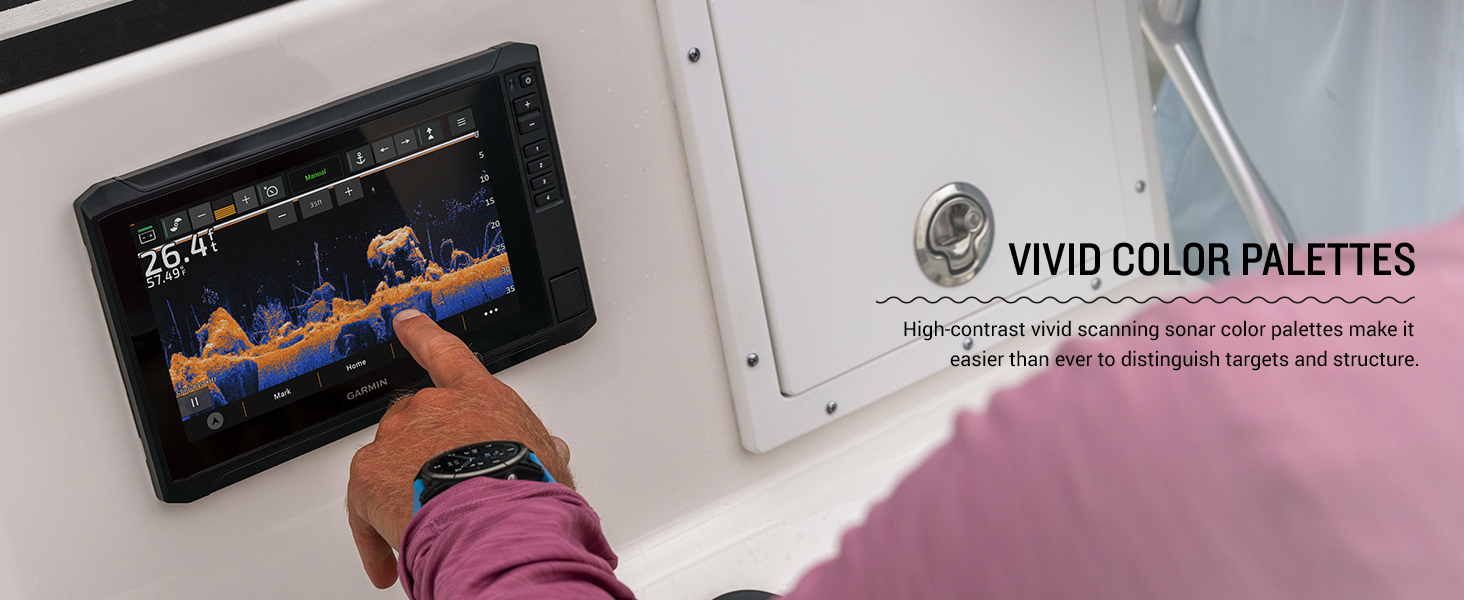
The ECHOMAP UHD2 6/7/9 sv owner’s manual says the sonar views you get depend on the transducer. With the GT54UHD-TM, that means three: high wide CHIRP traditional sonar for fish and bottom returns, UHD ClearVü at 800 kHz for a picture-like view below the boat, and SideVü at 455 kHz or UHD SideVü at 1,200 kHz for each side. The manual describes SideVü as a flat beam that scans to the sides, which it suggests using as a search tool for structure and fish.
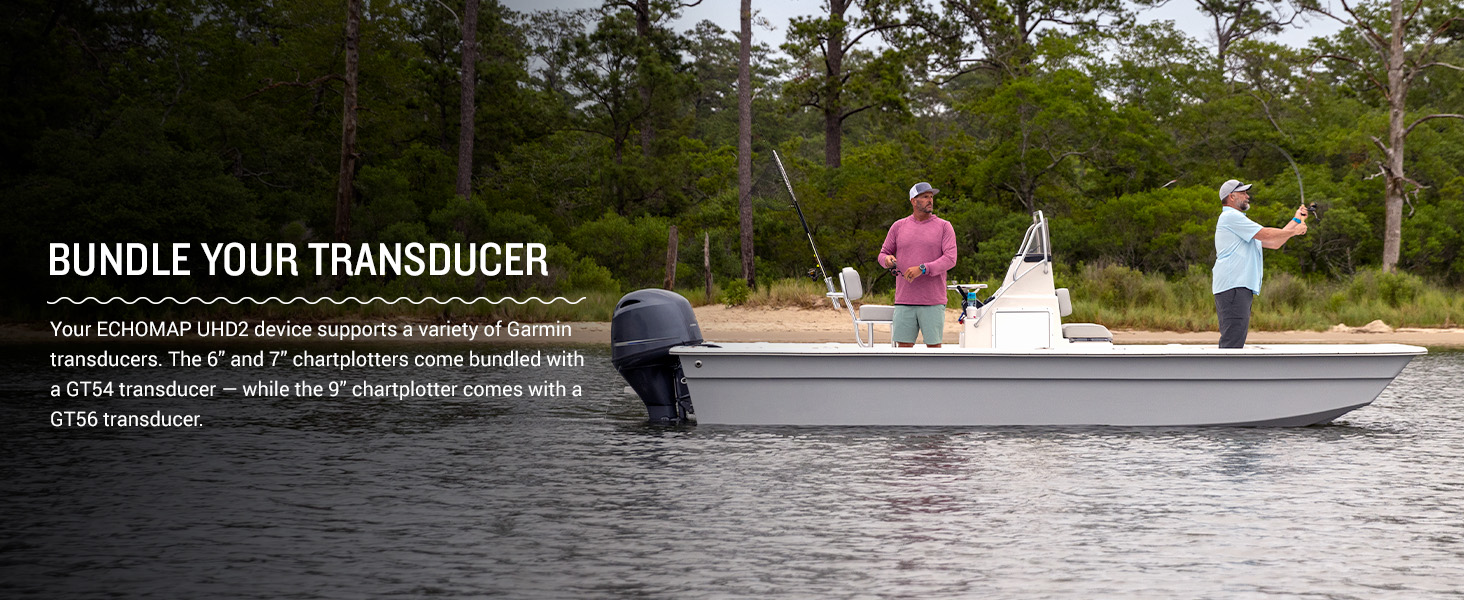
Depth is where the transducer, not the head unit, sets the limit. Garmin’s GT54UHD-TM page lists 800 ft for traditional CHIRP, 500 ft for SideVü, 200 ft for ClearVü, and 125 ft for UHD SideVü. The head unit lists traditional frequencies down to 50 kHz, but the GT54UHD-TM’s traditional channel runs 150 to 240 kHz. Per the manual, lower frequencies penetrate deep water better and higher ones give better bottom definition, so anglers who want low-frequency sonar for deep water would need a different compatible transducer.
The transducer comes with transom and trolling motor mounts and a 20 ft cable, so measure the run from your transom or trolling motor to the console before you drill.
Navionics+ Charts, Quickdraw, and the Memory Card
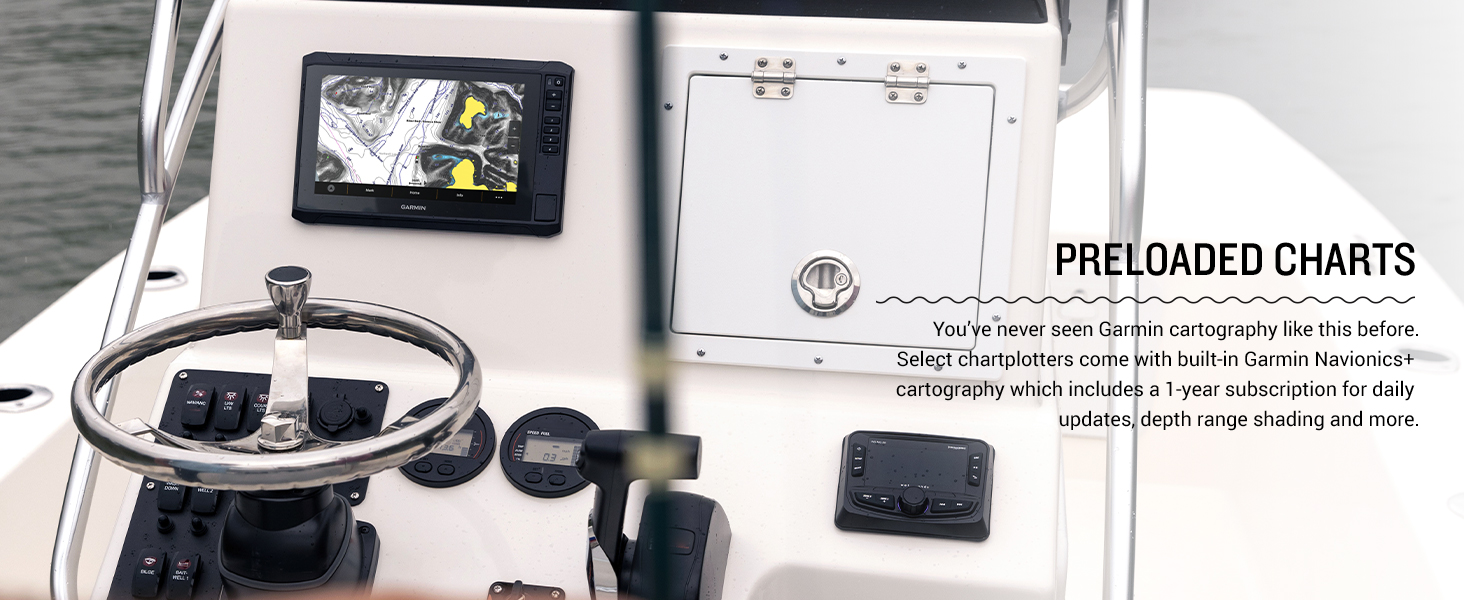
Garmin’s spec list gives the 73sv Navionics+ U.S. lakes coverage and tide tables. According to the Amazon listing, the inland maps cover more than 18,000 lakes with up to 1 ft contours. Garmin says the charts include a 1-year subscription for daily updates and depth range shading. The manual allows up to ten shaded depth ranges and suggests five or fewer inland, a quick way to mark the depth band where fish are biting.
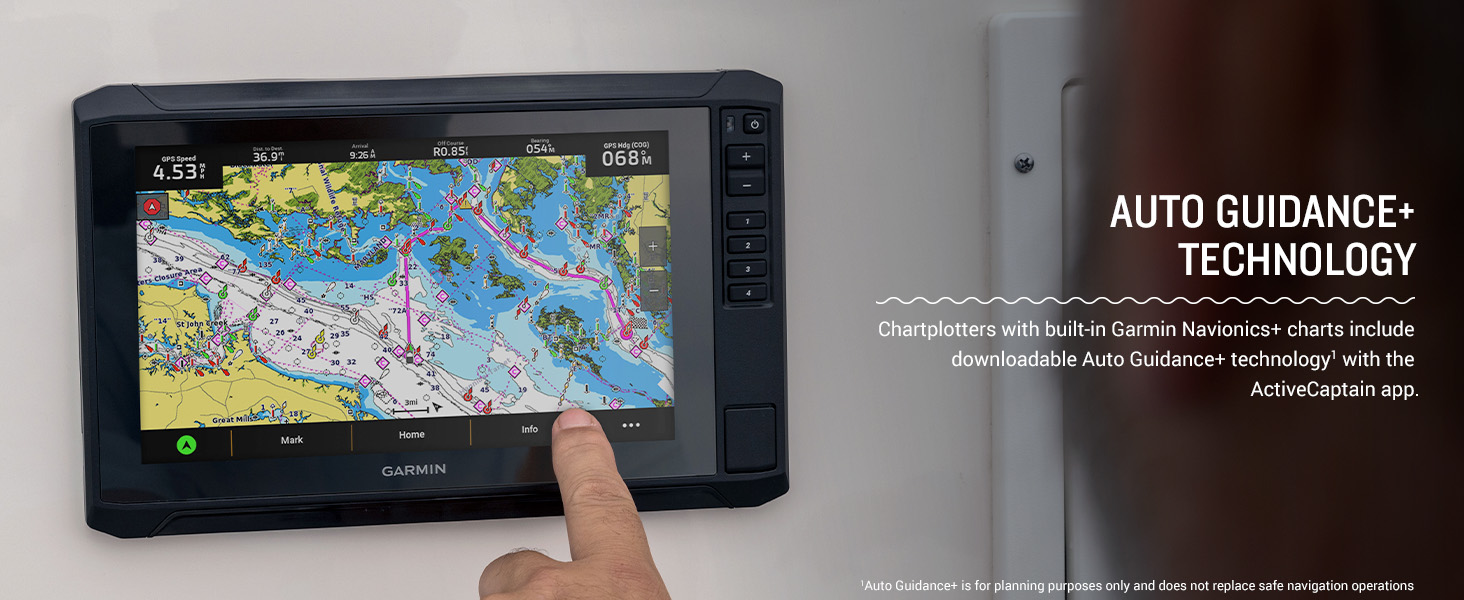
Garmin lists Auto Guidance+ as a download through the ActiveCaptain app, but the manual warns that it is built from chart data and does not ensure obstacle and bottom clearance, so watch the water. For lakes the charts cover thinly, Quickdraw Contours draws your own map with contours and depth labels as you drive. The manual says it needs sonar depth, GPS position, and a memory card with free space.
Plan on buying a microSD card. Garmin’s spec page lists a 32 GB maximum, while the current manual says software version 34.00 and later accepts cards up to 1 TB, formatted exFAT, speed class 10 or higher. One owner bought a blank 32 GB card to download software updates.
Wi-Fi, ActiveCaptain, and Force Trolling Motor Control
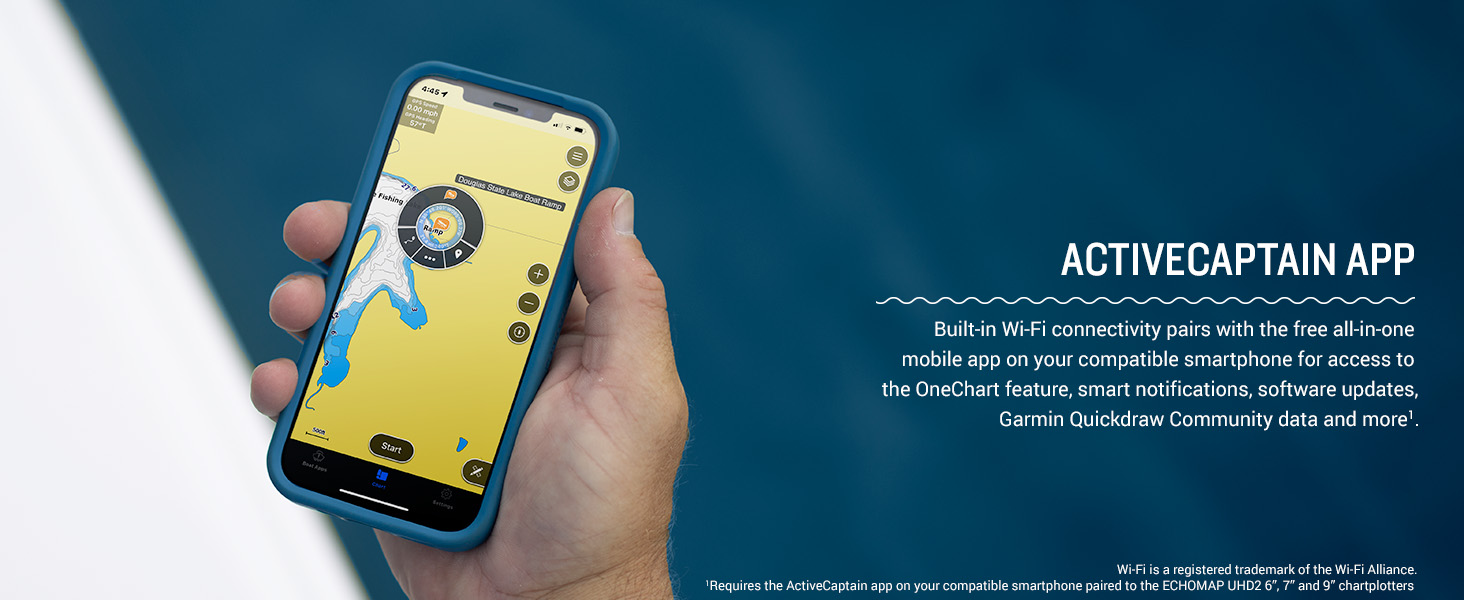
Per the manual, ActiveCaptain setup runs through the chartplotter’s own Wi-Fi network and a memory card set as the ActiveCaptain card, with your phone within 32 m (105 ft). The app updates software and charts, transfers waypoints and routes, and connects to Quickdraw Community maps. One owner calls the phone link “a bit technical” because you switch between the unit’s Wi-Fi and your home Wi-Fi while updating.
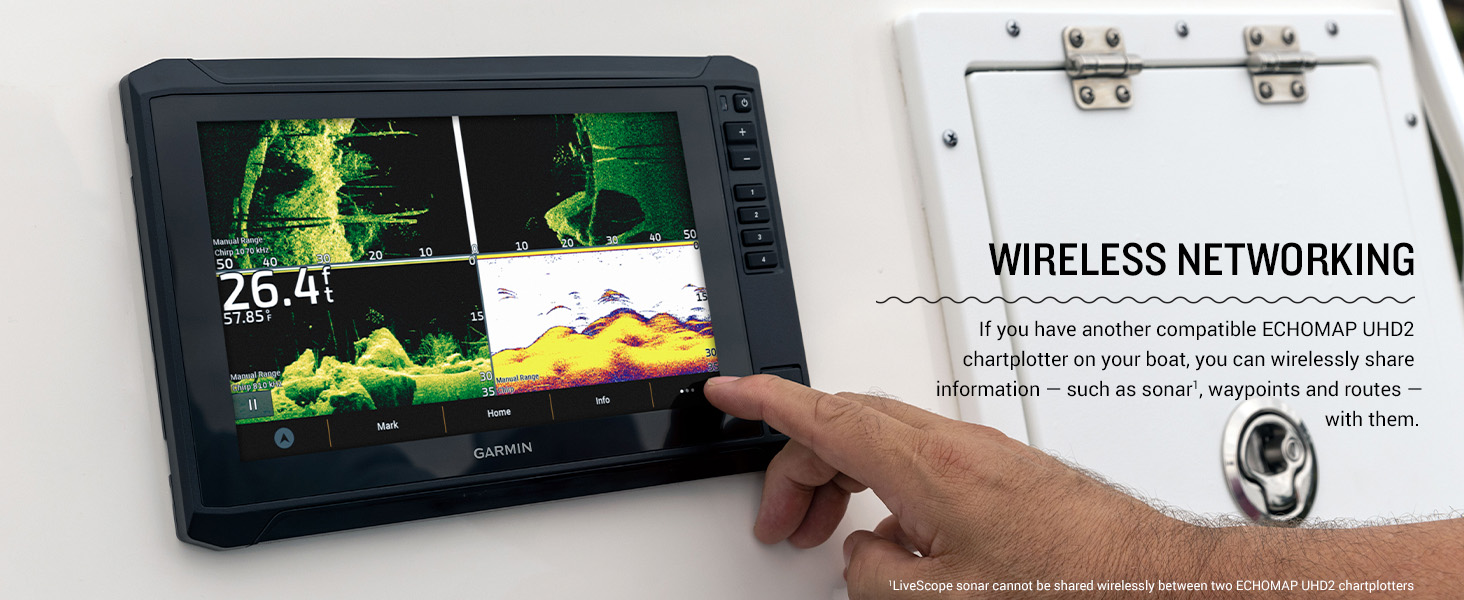
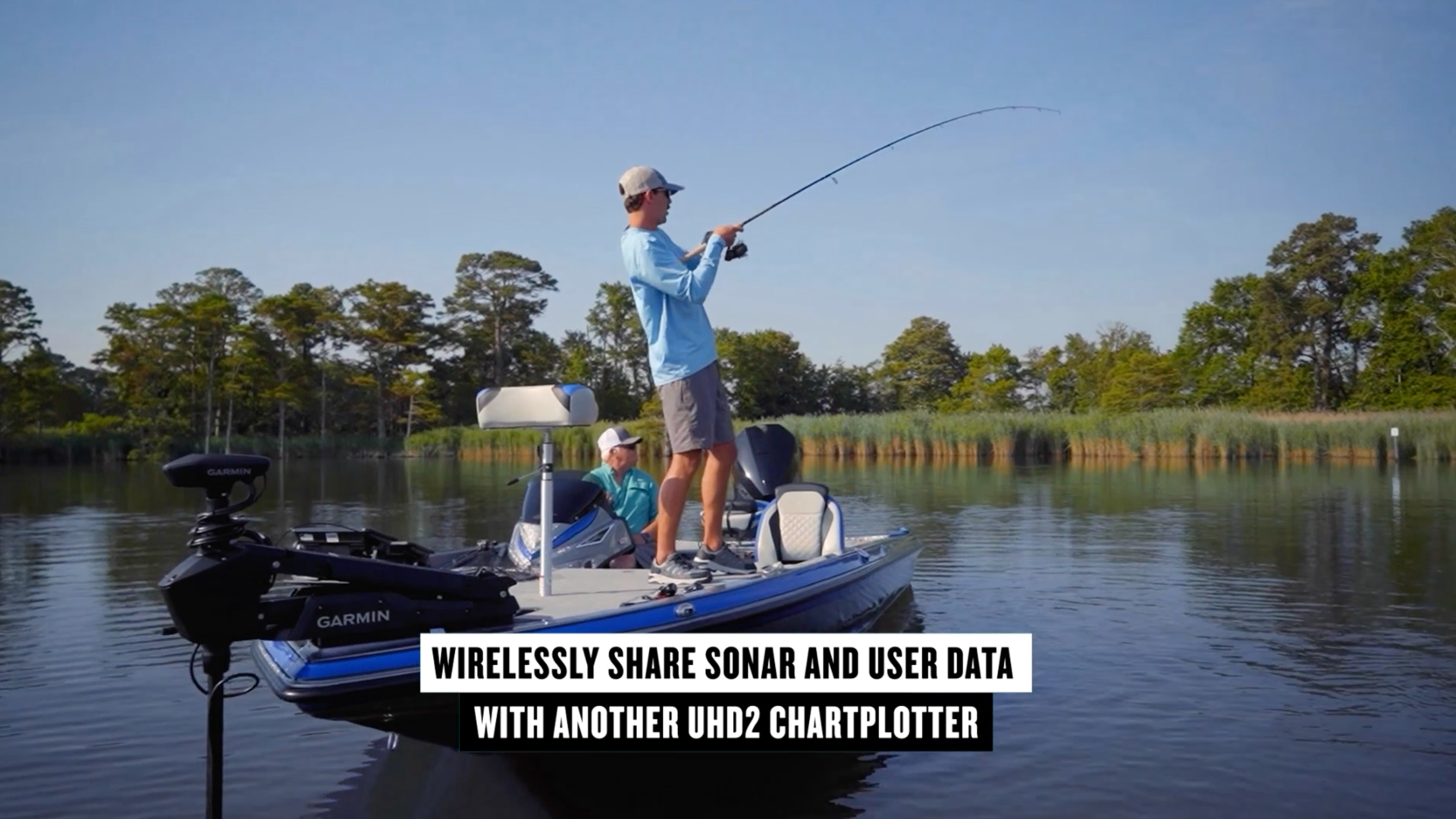
For a two-screen boat, the manual lists wireless sharing of user data and sonar with another ECHOMAP UHD2 or an ECHOMAP Ultra 2, two units at a time, within 32 m. If the second unit is a 5 or 7 in cv model, the 73sv has to be the host. One owner with an older Echomap 43cv was unsure the two could connect; the manual names only those two families.
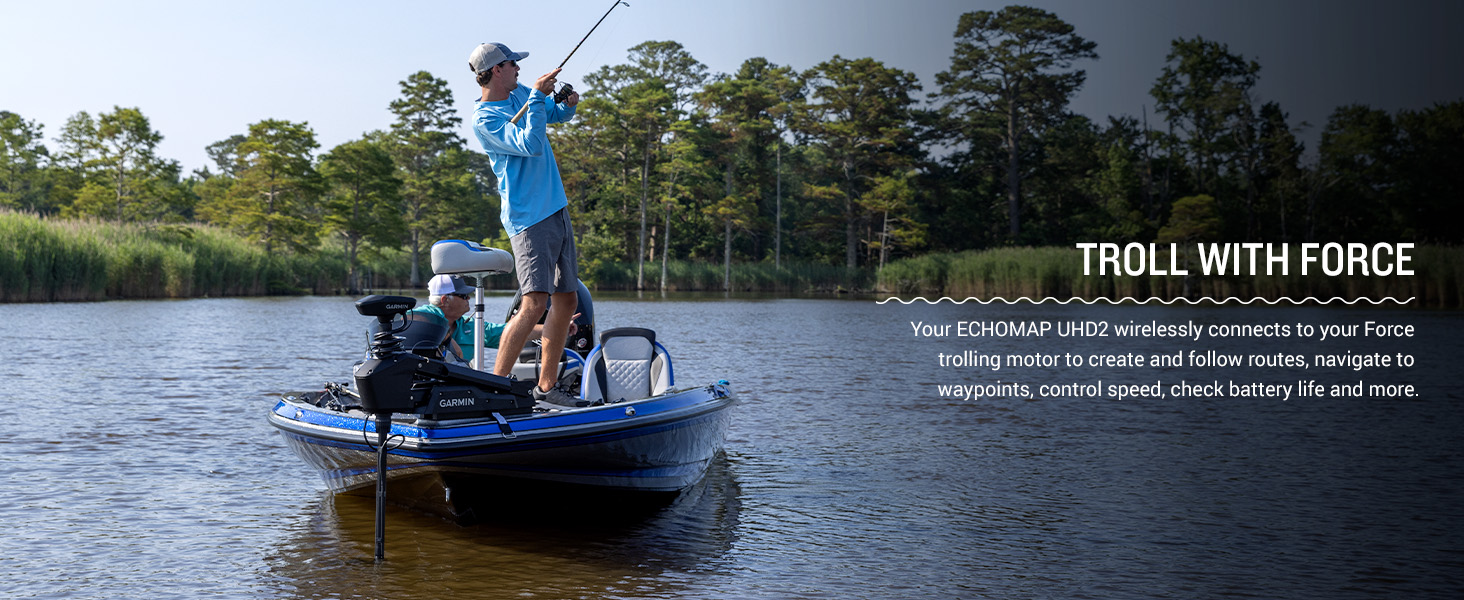
With a compatible Garmin Force trolling motor, the 73sv connects over Wi-Fi and adds a control bar for speed, anchor lock, heading hold, cruise control at your current speed over ground, and motor battery status, per the manual.
Mounting and Power
Garmin lists bail or flush mounting, a tilt/swivel mount with a quick release cradle in the box, and a 9 to 18 V input with a typical draw of 1.52 A at 12 V. One kayak owner runs it from a 20 Ah battery and reports at least 10 hours without running it dead. Follow Garmin’s installation instructions for wiring and fusing, and leave anything beyond them to a marine electrician.
What Owners Say
We read the eight owner reviews available for this Amazon listing. Its owner ratings exactly match the listing for the 6 in ECHOMAP UHD2 63sv, so Amazon may pool reviews across the two; treat these as impressions of this ECHOMAP UHD2 family.
- Setup: three owners describe setup as easy, including the kayak owner. One of them lists the steps: mount the transducer, run the wires, install the brackets, connect power, then update software through the app.
- Screen: one owner moving up from a 10-year-old 5 in Humminbird praises the larger screen, easier menus, and higher resolution, and another likes the extra screen space and the touchscreen.
- Maps and sonar: one owner notes the maps come preloaded rather than on a card and says sonar and charts work well.
How the ECHOMAP UHD2 73sv Compares
Here it is against two Garmin units with the same 800 x 480 pixel count: the Striker Vivid 7cv and the ECHOMAP UHD2 53cv.
| Garmin figure | ECHOMAP UHD2 73sv | Striker Vivid 7cv | ECHOMAP UHD2 53cv |
|---|---|---|---|
| Screen and input | 7.0 in touchscreen with keys | 7.0 in, keyed | 5 in (about 4.3 x 2.6 in), keyed |
| Sonar with included transducer | Traditional CHIRP, ClearVü, SideVü (GT54UHD-TM) | Traditional CHIRP, ClearVü (GT20-TM) | Traditional CHIRP, ClearVü (GT20-TM) |
| Charts | Navionics+ U.S. inland built in | Quickdraw Contours only | Navionics+ U.S. inland built in |
| GPS | GPS, GLONASS, Galileo, BeiDou; multi-band; 10 Hz | GPS, WAAS | GPS, Galileo; 5 Hz |
| Memory card slot | microSD | Not listed | microSD |
| Power input | 9 to 18 V DC | 12 to 20 V DC | 9 to 18 V DC |
| Weight | 2.2 lb | 1.7 lb | 1.1 lb |
At the same screen size, Garmin lists a touchscreen, SideVü, built-in Navionics+ charts, a microSD slot, and four satellite systems for the 73sv, none of which appear on the Vivid 7cv’s spec list; the Vivid also lists a higher 12 V minimum input. The Vivid 7cv is lighter and lists Quickdraw Contours rather than preloaded charts, which fits anglers who prefer to map their own water. Garmin lists the same Navionics+ U.S. lakes coverage for the 53cv, so there the 73sv adds SideVü and a larger touchscreen. Our roundup of the best Garmin fishfinders compares more of the lineup, and our explainer on side imaging vs down imaging covers whether SideVü is worth it on your water.
Who Should Look Elsewhere
- Coastal and Great Lakes anglers: Garmin sells the 74sv with Navionics+ U.S. coastal and Great Lakes mapping.
- Deep-water anglers who need traditional sonar past 800 ft or low frequencies, which call for a different transducer.
- Kayak anglers short on deck space: at 8.6 x 5.6 in and 2.2 lb, a 5 in unit may fit better, though one kayak owner finds the 7 in screen stays out of the way. Our Garmin Striker Vivid 5cv review covers one.
- Shore and ice anglers without a boat. Castable sonars and portable kits are in our roundup of the best fish finders and the Fish Finders section.
Why You Should Trust Us
We do not run our own product trials. This review draws on Garmin’s pages for this part number, the GT54UHD-TM, and the comparison models, the owner’s manual, the Amazon listing, and its owner reviews. Each AnglerTechLab Score starts from Amazon owner ratings, with a limited editorial adjustment explained on our How We Review page. We lowered this listing’s score by 0.2, counted once for two reasons: its owner ratings exactly match the listing for the 6 in ECHOMAP UHD2 63sv, so they may be pooled with that model, and it gives a 1,000 ft maximum depth while Garmin’s page for the included transducer lists 800 ft for traditional sonar (Garmin’s head unit page lists no depth figure).
Final Verdict
The Garmin ECHOMAP UHD2 73sv puts preloaded U.S. lake charts, all three Garmin sonar views, and multi-band GPS on a 7 in touchscreen, with Force trolling motor control for boats that have one. Budget for a microSD card and activate the charts in the app before your first trip.
Frequently Asked Questions
Does the Garmin ECHOMAP UHD2 73sv come with maps?
Yes. This version has Garmin Navionics+ U.S. inland mapping built in.
Is the ECHOMAP UHD2 73sv compatible with LiveScope?
Garmin lists LiveScope support for the head unit. The LiveScope system and its transducer are sold separately and are not in this box.
What is the difference between the ECHOMAP UHD2 73sv and 74sv?
The charts. Garmin’s spec list gives the 73sv U.S. lakes and the 74sv U.S. coastal coverage, and its product name for the 74sv adds the Great Lakes. Garmin lists tide tables for both.
How many pins does the Garmin ECHOMAP UHD2 54cv transducer use?
Garmin lists one 4-pin transducer port on the 5 in cv models, including the 54cv, which ships with a GT20-TM. The 73sv has a 12-pin transducer port, and the GT54UHD-TM has 12 pins, so check Garmin’s compatibility list before moving a transducer between them.
About the author

Mason McKinney enjoys fishing Minnesota's lakes for crappie, walleye, and other freshwater species. He uses forward-facing sonar, GPS fish finders, and spot-lock trolling motors to locate fish around underwater structures and maintain precise boat positioning.