
LiTime Trolling Motor Battery Review: 12V 50Ah Run Time and Charging
Our LiTime trolling motor battery review covers the 12V 50Ah LiFePO4: run time owners report, BMS limits, charging, cold weather, and who should skip it.
 Updated October 30, 2026

The LiTime trolling motor battery reviewed here is the 12V 50Ah LiFePO4 battery sold on Amazon as a trolling motor battery, the version without Bluetooth. It is a small, light lithium battery for a kayak motor, a small jon boat, or a separate electronics circuit, and it is a poor match for a big bow mount on a long, windy day. LiTime’s own product page aims its non-Bluetooth 12V 50Ah battery at 20 to 30 lb thrust trolling motors and fish finders, and its buying guide says a 50Ah battery “may work for lightweight boats and short trips.” Owners on this listing run it on bigger motors, 55 and 62 lb, and describe a few hours of use, not a full day.
This review is research-based. Battery specifications come from the Amazon listing and from LiTime’s product page for its non-Bluetooth 12V 50Ah battery, which gives the same 11.57 lb weight and the same case size as this listing. The listing’s UPC and model number do not appear on LiTime’s page, so we matched the two by weight, case size, and the non-Bluetooth description; the listing is sold by LiTime’s own Amazon store. Owner comments come only from reviews posted on this Amazon listing.
This guide is general product information, not repair or electrical safety advice. Follow the installation, wiring, and charging instructions in your product’s manual, stop using any battery, charger, or electronics that overheat, swell, or smell of burning, and contact the manufacturer.
We earn a commission from qualifying purchases made through links on this page. Commissions never affect our rankings or AnglerTechLab Scores.

LiTime 12V 50Ah LiFePO4 Trolling Motor Battery




As an Amazon Associate I earn from qualifying purchases.
LiTime Trolling Motor Battery at a Glance: 12V 50Ah LiFePO4
Sources: the Amazon listing (L) and LiTime’s product page for the non-Bluetooth 12V 50Ah battery (LT).
| Spec | LiTime 12V 50Ah LiFePO4, non-Bluetooth |
|---|---|
| Chemistry | LiFePO4 (L, LT) |
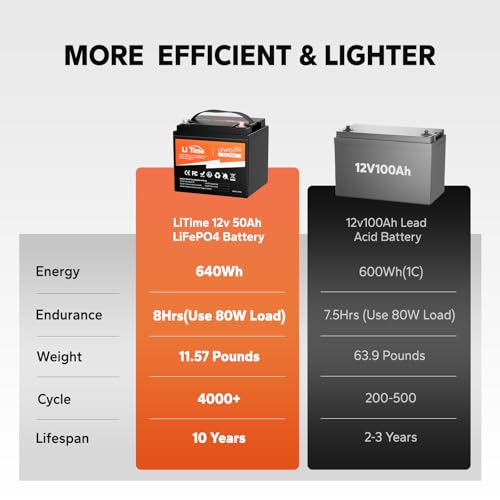
| Nominal voltage and capacity | 12.8 V, 50 Ah (L, LT); 640 Wh (LT) |
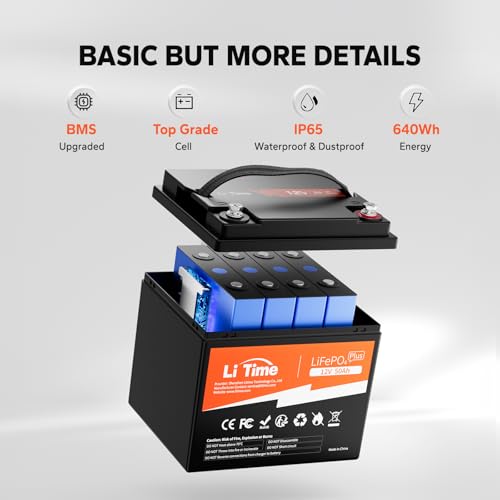
| BMS | 50 A; max continuous charge and discharge current 50 A each (LT) |
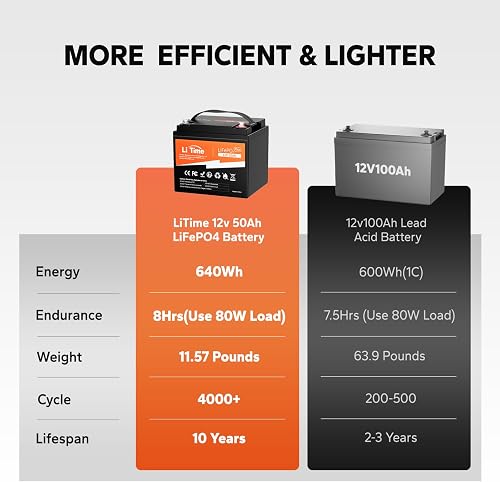
| Weight | 11.57 lb (LT); the listing’s Item Weight field reads 11.6 lb |
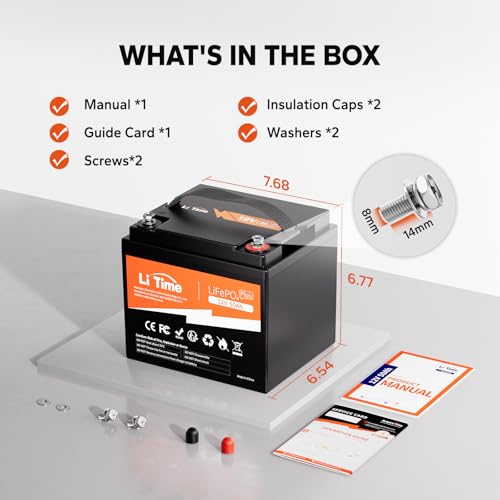
| Size | 7.68 x 6.54 x 6.77 in (L, LT product description); LiTime’s spec table gives 7.79 x 6.53 x 6.69 in |
| Terminals | M8 bolts (LT) |
| Charge method and voltage | CC/CV, 14.4 V plus or minus 0.2 V (LT) |
| Recommended charge current | 10 A (LT) |
| Charge temperature | 32°F to 122°F (LT) |
| Discharge temperature | -4°F to 140°F (LT) |
| Bluetooth, self-heating | None (L: “Not Bluetooth Version”; LT spec table) |
| Cycle life | 4,000 cycles at 100% depth of discharge (LT) |
| Protection class | IP65 (LT) |
| Warranty | 5 years (L, LT) |
What We Like
- Easy to carry. It weighs 11.57 lb, per LiTime. One owner who runs it in a kayak says it works without adding much weight, and another likes how easy it is to get in and out of the boat.
- Full power until it is empty. One owner with a 62 lb thrust motor says it runs at full power until it runs out.
- A BMS with listed protections. LiTime’s page names five: over-charging, over-discharging, over-current, short circuit, and overheating protection.
- Clear charging guidance. LiTime publishes a recommended charge current, charge voltage, and charge temperature range for this battery, which makes choosing a charger straightforward.
- Five-year warranty, per both the listing and LiTime’s page.
What Could Be Better
- 50 Ah runs out fast on a bigger motor. One owner running a 55 lb, 12 V motor says it lasted about 4.5 hours of constant use on a windy trip and calls it a four-hour battery for a typical trolling motor.
- No Bluetooth monitoring. This is the non-Bluetooth version, per the listing. One owner says they have not found a good way to tell how much charge is left, so they carry a spare battery.
- No cold-weather charging. LiTime says this model should only be charged above 32°F and that charging in freezing temperatures will damage the cells.
- One owner’s support experience was slow. One owner who used it for electronics says it stopped taking a full charge after about a month, that support replies took a day or two and came with many troubleshooting steps, and that LiTime eventually offered a replacement, which the owner accepted.
Is 50 Ah Enough for Your Trolling Motor?
Start with LiTime’s own math. Its product page says the run time of a 50 Ah battery is inversely related to the current it delivers: at 25 amps it estimates two hours, at 10 amps five hours, and it calls these theoretical figures. A trolling motor rarely draws a steady current, because speed, wind, and current change what it pulls, so treat those numbers as a ceiling, not a forecast.
The owner reports fill in the real-world side. One owner with a 62 lb thrust motor says it lasts about three hours on the lake, depending on how far they go and how windy it is, and that one battery alone is fine for an hour or two on a calm day. Another, running a 55 lb motor, got about 4.5 hours of constant use in high winds. That owner compared it with their 60 Ah lead acid battery, which they call a six-hour battery, and concluded the real gain from lithium was lower weight. A kayak angler reports many days of fishing on it with a kayak trolling motor. If you want a broader view of how long a trolling motor battery lasts, our guide covers the factors in detail.
How much current the battery can deliver matters as much as amp-hours. In a separate buying guide, LiTime advises choosing a battery whose BMS continuous discharge rating is higher than the motor’s maximum current requirement, with margin, and warns that an undersized BMS may shut down or enter protection mode when the motor demands high current. This battery’s BMS is rated for 50 A continuous discharge, per LiTime. Look up the maximum current draw in your motor’s manual and compare before you buy. If the margin is thin, or you need a full day on a larger motor, read our guide to what size lithium battery a trolling motor needs before settling on 50 Ah.
Charging: What LiTime Recommends
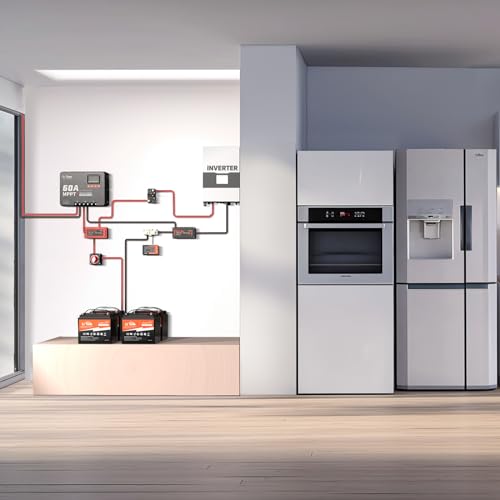
LiTime lists a CC/CV charge method, a charge voltage of 14.4 V plus or minus 0.2 V, and a recommended charge current of 10 A for this battery, while its FAQ lists both 10 A and 25 A as recommended currents: about five hours to full at 10 A, and about two hours to roughly 97% at 25 A. Check which one your charger and the manual in the box call for, and confirm these figures against that manual before you pick a charger. The same page lists four ways to charge: a LiFePO4 charger, solar through a charge controller, an alternator through a DC-to-DC charger, and a generator through an AC-to-DC charger.
Use a charger made for LiFePO4. LiTime’s marine battery maintenance guide recommends a dedicated LiFePO4 charger for LiFePO4 marine batteries and notes that lead acid, AGM, gel, and lithium batteries need different charging voltages and profiles. For the step-by-step side, see our guide to charging a trolling motor battery, and leave any onboard charger or DC-to-DC installation to a qualified marine technician.
One owner thought this battery charged slowly, about twice as long as other brands, then found the cause: it was powering a depth finder and GPS that used a lot of power. Before you blame the battery, check what it is running.
Cold Weather, Storage, and Warning Signs
Cold limits are the main catch for early spring and late fall anglers. LiTime’s page gives a charge range of 32°F to 122°F and a discharge range of -4°F to 140°F, and its FAQ says this model should only be charged when the battery’s temperature is above 32°F, recommending you bring it indoors to charge on cold days. LiTime points anyone who needs to charge in freezing weather to its Cold Weather Batteries instead. The spec table shows no self-heating and no Bluetooth for this model, and LiTime’s comparison table leaves low-temperature protection unmarked for this model, though its spec table also lists an automatic charge-off below 32°F.
For the off-season, LiTime’s FAQ recommends storing the battery at about 50% charge, recharging it to 50% at least every three months, disconnecting it from all loads and chargers, and keeping it between 14°F and 122°F. The product page also asks you not to position the battery with the bolt side facing down.
LiTime’s maintenance guide says to check the case for cracks, leaks, or swelling and to stop using the battery immediately if you find any abnormal condition. Doing that before each season, and again after any hard knock, is a sensible habit. If the battery swells, gets unusually hot, or smells of burning, stop using it and contact LiTime.
Fitting It to a Kayak or Small Boat
Measure the space you have against the case size above, and allow a little room, since LiTime’s two sets of dimensions differ slightly. LiTime’s FAQ suggests a dedicated battery box to protect the battery from physical damage, dust, and moisture. The wiring between battery, fuse or breaker, and motor follows your motor’s manual, and a qualified marine technician should handle anything you are unsure about.
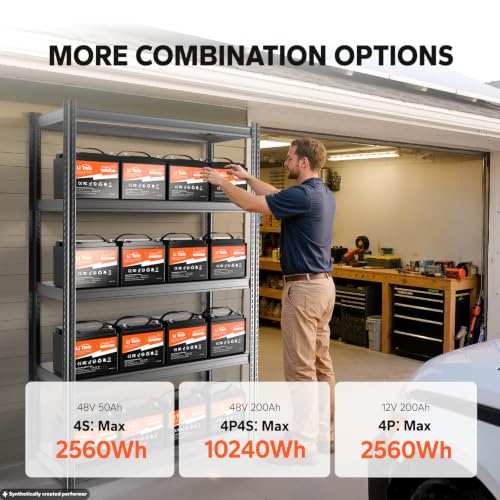
If your motor runs on 24 V, one battery will not do. LiTime’s page says batteries connected in series or parallel should be of the same brand, type, voltage, amps, and BMS “and within 1 month,” a phrase the page does not spell out; ask LiTime what it measures. That is a good reason to buy a matched pair at the same time rather than adding a second battery later. LiTime’s comparison table also lists a 24V 50Ah TM Smart battery at 25.6 V.
How It Compares
LiTime’s own comparison table on the product page sets this battery next to two TM Smart versions. Figures below are LiTime’s.
| LiTime figure | 12V 50Ah (this review) | 12V 50Ah TM Smart | 24V 50Ah TM Smart |
|---|---|---|---|
| Nominal voltage | 12.8 V | 12.8 V | 25.6 V |
| Energy | 640 Wh | 640 Wh | 1280 Wh |
| BMS | 50 A | 50 A | 50 A |
| Bluetooth | No | Yes | Yes |
| Low-temperature protection | Not marked | Yes | Yes |
| Weight | 11.57 lb | 11.27 lb | 21.15 lb |
| Size | 7.79 x 6.53 x 6.69 in | 7.68 x 6.54 x 6.77 in | 10.24 x 6.61 x 8.31 in (Group 24) |
LiTime 12V 50Ah TM Smart. The same capacity and BMS rating in essentially the same case, with Bluetooth and low-temperature protection added, per LiTime’s table. If you want a charge readout on your phone or fish in cold weather, that is the version to look at. We have not reviewed its Amazon listing.
A larger lithium battery. If the owner reports above sound short for your day, more capacity is the fix, not a different chemistry. Our lithium vs AGM trolling motor battery comparison explains the trade-offs between the two chemistries, including weight and usable capacity.
A lead acid battery of similar capacity. One owner on this listing compared it with their 60 Ah lead acid battery and concluded they were paying for lower weight rather than longer run time. If weight does not matter on your boat, a deep cycle lead acid battery is an option. A car starting battery is a different design; our guide on whether you can use a car battery for a trolling motor explains the difference.
Who Should Look Elsewhere
- You run a 55 lb or larger motor all day. Owners on this listing report roughly three to four and a half hours with 55 and 62 lb motors. Step up in capacity.
- You fish or charge in freezing weather. LiTime’s table shows no self-heating and leaves low-temperature protection unmarked for this model, and its FAQ says to charge it only above 32°F.
- You want to see the charge level. Choose a Bluetooth version or add a battery monitor.
- Your motor needs 24 V or 36 V and you only want one battery. Look at a battery built for that voltage.
- You need to start an outboard. LiTime says this is not a starting battery.
Why You Should Trust Us
We do not conduct our own product trials. This review draws on the maker’s published specifications and manuals where we could open them, the Amazon listing, and owner reviews posted on that listing where available. The AnglerTechLab Score starts from Amazon owner ratings, with a limited editorial adjustment explained on our How We Review page. Commissions never change a score or a verdict. LiTime’s page and the listing agreed on weight, size, voltage, BMS, and warranty, so we made no editorial adjustment to its score; the method is on our How We Review page. More batteries and chargers are in our batteries and power section.
Final Verdict
This LiTime trolling motor battery is a good fit for a kayak motor, a small jon boat with a light transom motor, or a dedicated electronics circuit, where its 11.57 lb weight is the main gain over lead acid. It is the wrong battery for a 55 lb or larger motor on a full day, for cold-weather charging, or for anyone who wants to watch the charge level. Match the BMS rating to your motor’s maximum draw, charge it with a LiFePO4 charger above 32°F, and it does what LiTime says it is for.
Frequently Asked Questions
How long will a LiTime 50Ah battery run a trolling motor?
It depends on how hard the motor works. LiTime’s theoretical figures are two hours at 25 amps and five hours at 10 amps. With 55 and 62 lb motors, owners on this listing report a few hours.
Can I charge a LiTime battery with a lead acid charger?
LiTime recommends a dedicated LiFePO4 charger, because lead acid and lithium batteries need different charging profiles. For this battery, it lists a charge voltage of 14.4 V plus or minus 0.2 V and a recommended charge current of 10 A.
Can I use the LiTime 12V 50Ah for a 24 V trolling motor?
Only as part of a matched pair in series. LiTime says batteries in series or parallel should match in brand, type, voltage, amps, and BMS and be “within 1 month”; ask LiTime how it measures that. Have a qualified marine technician wire the bank following your motor’s manual.
Does the LiTime 50Ah battery work in cold weather?
LiTime lists a discharge range down to -4°F but says this model should only be charged above 32°F. LiTime’s table shows no self-heating and leaves low-temperature protection unmarked for this model, though its spec table lists an automatic charge-off below 32°F. Ice anglers who need to charge in the cold should look at a cold-weather model.
Can the LiTime 12V 50Ah start a boat engine?
No. Both the listing and LiTime’s page say it is not for starting engines. Use a marine starting battery for the outboard and keep this one for the trolling motor or electronics.
About the author

Jar Gomez loves kayak fishing along Florida's Gulf Coast, targeting redfish, speckled trout, and other inshore species. He uses compact fish finders, portable transducers, and kayak trolling motors to navigate shallow waters and discover productive fishing areas.