
Minn Kota Edge Review: 45 lb Foot Pedal Bow Mount for Small Boats
Our Minn Kota Edge review covers the 45 lb, 36 in bow mount with a cable-steer foot pedal: boat fit, mounting, wiring, and who should skip it.
 Updated November 3, 2026

The Minn Kota Edge reviewed here is the 45 lb thrust, 12 V freshwater bow mount with a 36 in shaft and a heel-toe, cable-steer foot pedal, sold on Amazon under manufacturer part number 1355946. According to the Amazon listing, you steer and set speed with your feet, choose from five speed settings, and stow the motor in a latch-and-door bracket. There is no GPS, remote, or Spot-Lock in the listing. If you fish a small aluminum boat or a jon boat on one 12 V battery and want simple bow steering with both hands free for the rod, it fits. If you want the motor to hold position for you, look at a GPS model instead.
This Minn Kota Edge review is research-based. The motor specifications below come from the Amazon listing, checked against Minn Kota’s Edge specifications page, which lists this model (part 1355946) as current, and the battery and wiring guidance comes from a general chart we could open on Minn Kota’s site.
This guide is general product information, not repair or electrical safety advice. Follow the installation, wiring, and charging instructions in your product’s manual, stop using any battery, charger, or electronics that overheat, swell, or smell of burning, and contact the manufacturer.
We earn a commission from qualifying purchases made through links on this page. Commissions never affect our rankings or AnglerTechLab Scores.

Minn Kota Edge 45 Bow-Mount Trolling Motor with Foot Pedal




As an Amazon Associate I earn from qualifying purchases.
Minn Kota Edge 45 at a Glance
Rows come from the Amazon listing unless marked “per Minn Kota.” Where the listing leaves something out, the row says so.
| Spec | Minn Kota Edge, 45 lb, 36 in shaft (part number 1355946) |
|---|---|
| Thrust and voltage | 45 lb, 12 V |
| Shaft length | 36 in |
| Mount | Bow mount with latch-and-door bracket |
| Steering | Heel-toe, cable-steer foot pedal; Operation Mode field reads Manual |
| Speed | Five speed settings; momentary and constant on/off on the pedal |
| Propeller | Power Prop (MKP-2 kit), per the listing and Minn Kota’s prop chart |
| In the box | Motor, MKP-2 prop, hold down strap, mounting hardware |
| Item Weight field | 18 lb; the listing does not say whether this includes packaging. Minn Kota lists a 43 lb shipping weight |
| Other | Directional indicator on top of the motor head |
| GPS, remote, battery meter | None mentioned |
| Water type | Freshwater |
| Warranty | 2 year manufacturer |
What We Like
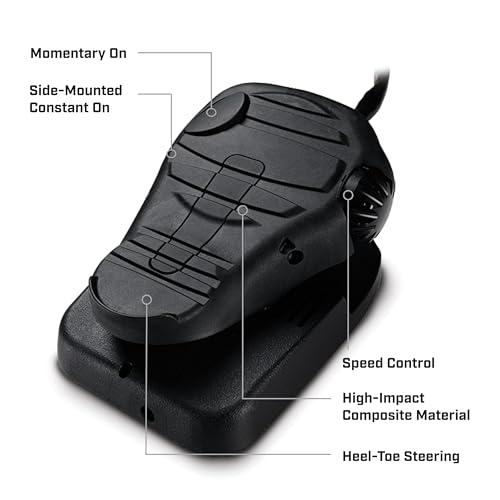
- Hands stay on the rod. The heel-toe pedal steers the motor through a cable and, per the listing, carries the speed control and the on/off switch, so you can work a bank while the boat moves.
- A prop for weedy water. The features describe a Power Prop “for heavy vegetation,” and Minn Kota’s prop chart lists the MKP-2 kit in the box as the Power Prop for the Edge 45.
- A bracket made for stowing and removal. According to the Amazon listing, the latch-and-door bracket gives a secure hold while stowed and makes for easy removal at the end of the day. A hold down strap is in the box.
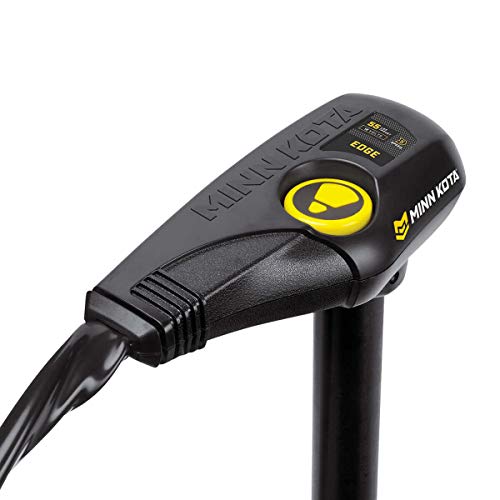
- You can see where the motor points. A directional indicator sits on top of the motor head, per the listing, so you can check which way the motor points at a glance.
- Little to set up. No GPS calibration, remote pairing, or app appears in the listing. Once it is mounted and wired, it is a pedal and a motor.
What Could Be Better
- No position hold. Without GPS, you hold a spot by working the pedal or dropping an anchor. In wind, that is constant footwork.
- Five fixed speeds. The listing describes five settings, while the PowerDrive, Terrova, and Endura Max listings describe variable speed. Five steps can feel coarse when you want to creep along a weed line.
- A short shaft. At 36 in, it suits low bows. On a taller deck or in a chop, the propeller may sit too close to the surface.
- No battery meter mentioned. The PowerDrive and Endura Max listings each mention a battery meter; the Edge listing does not, so plan to check charge another way.
- Freshwater only, per the title and the Recommended Uses field.
The Foot Pedal and Cable Steering
The listing calls it a “Heel-Toe/Cable-Steer Foot Pedal.” A heel-toe pedal is generally rocked toward the heel or the toe to turn the motor, and on a cable-steer motor a cable carries that movement to the motor head; your manual describes the exact controls. The pedal also holds the speed control and, according to the listing, both momentary and constant on/off. Momentary usually means the motor runs only while you hold the switch down, which suits short repositioning moves; constant keeps it running so you can take your foot off the button on a long troll. Your manual describes the exact controls for your motor.
Cable steering means no remote to pair and no GPS to calibrate, going by the listing, and it also means the motor needs your attention all day. It goes where your foot puts it. On a calm pond or a slow river bend, that is easy. On a windy flat, you will be correcting all the time, and that is where a GPS motor with Spot-Lock helps. If you are unsure which you need, it helps to know what Spot-Lock does and when it pays off.
The listing describes the pedal as made from a high-impact composite material. It does not give a cable length or say how far from the mount the pedal can sit, so plan the pedal position on your deck before you drill.
Thrust, Shaft Length, and Boat Fit
Forty-five pounds of thrust on 12 V is modest next to the 55 lb motors in the comparison table below. The listing’s description pitches the Edge at smaller boats, and the short shaft and single 12 V battery fit that. A small aluminum boat, a jon boat, or a light fiberglass hull on a lake fits that profile. A heavy boat, a full load of people and gear, or steady current calls for more thrust, so check how much thrust your boat needs before you settle on 45 lb.
Shaft length is the other half of the fit. A bow mount needs enough shaft to keep the propeller under the surface when the bow lifts, and 36 in is the shortest shaft of the four motors we compare below. Measure shaft length from your own deck to the waterline before you order. If your bow sits high, a longer shaft than this listing offers will serve you better; Amazon listing titles show the Edge with longer shafts, covered in the FAQ below.
For the propeller, the features describe a Power Prop “for heavy vegetation,” designed for 3-1/4 in motor diameters, with the prop pin, nut, and washer included. The Included Components field names an MKP-2 prop. Minn Kota’s prop chart lists the MKP-2 kit as the Power Prop for the Edge 40 and 45, so the two lines describe the same propeller.
Mounting and Stowing the Edge
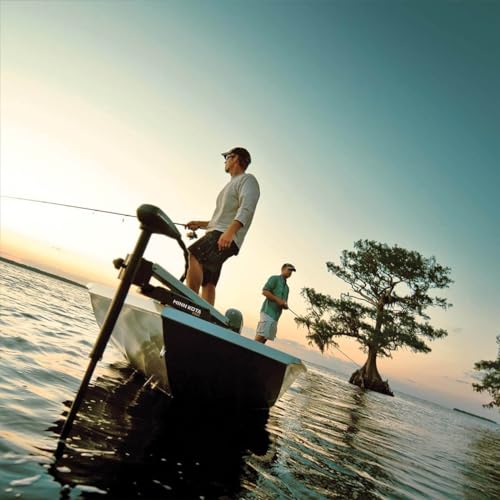
A bow mount pulls the boat from the front and puts the controls where you fish, on the casting deck. If you are still weighing bow mount and transom mount, keep in mind that a transom motor usually clamps on without drilling the deck.
The Edge bolts to the bow with the mounting hardware in the box, per the listing. The description says the compact mount is built from extruded, anodized aluminum, with a composite head. According to the listing, the latch-and-door bracket gives a secure hold while the motor is stowed; a hold down strap is also in the box. Pick a flat, solid spot at the bow with room for the motor to lie down when stowed, then follow the installation instructions that come with the motor.
Battery and Wiring
The listing gives 12 V, so one 12 V battery runs the Edge. Minn Kota’s help center says to use a deep cycle marine battery, not a starting battery, and to use a separate deep cycle battery if a cranking battery starts your gasoline outboard. It also suggests a minimum amp-hour rating, so take that figure from the manual for your motor. For lithium, follow the battery maker’s instructions and your motor’s manual.
For wiring, the chart says an over-current protection device, a circuit breaker or fuse, must be used, and that altering boat wiring should be completed by a qualified marine technician. Breaker size and wire gauge depend on the motor and the length of the run, so take them from your motor’s manual or your technician, not from this review. The chart also says, for safety reasons, not to switch the motor on until the propeller is in the water, and to disconnect the motor from the battery when it is not in use or while the battery charges.
How It Compares
Here is the Edge next to three other Minn Kota motors we have looked at. Every figure comes from the Amazon listings unless marked “per Minn Kota.”
| Listing detail | Edge 45 (this review) | PowerDrive 55 | Terrova 55 | Endura Max 55 |
|---|---|---|---|---|
| Mount | Bow | Bow | Bow | Transom |
| Thrust, voltage, shaft | 45 lb, 12 V, 36 in | 55 lb, 12 V, 54 in | 55 lb, 12 V, 54 in | 55 lb, 12 V, 42 in |
| Steering | Cable-steer foot pedal | Micro remote | LCD remote | Telescoping tiller |
| GPS position hold | Not mentioned | Spot-Lock | Spot-Lock with 5 ft jog | Not mentioned |
| Speed control | Five settings | Variable speed | Variable speed | Variable forward and reverse |
| Item Weight field | 18 lb | Not listed | 48.8 lb | Not listed |
| Shipping weight, per Minn Kota | 43 lb | 44 lb | 46 lb | 27.9 lb |
| Warranty | 2 year manufacturer | 2 year manufacturer | Three years with registration | 2 year manufacturer |
Minn Kota PowerDrive 55. The step up to GPS on 12 V: Spot-Lock with drift, follow, and dodge modes, electric steering from a micro remote according to its description, and a 54 in shaft. Its listing description mentions a foot pedal, but Minn Kota says this GPS model cannot use one.
Minn Kota Terrova 55. More GPS features again, including the jog, path recording, a heading sensor, and an LCD remote, with a much higher Item Weight figure in its listing, though Minn Kota’s shipping weights for the two are close.
Minn Kota Endura Max 55. A transom motor with a telescoping tiller and variable speed, for anglers who would rather clamp a motor to the stern than drill the bow.
Who Should Look Elsewhere
- You want the boat to hold a spot by itself. Choose a GPS motor with Spot-Lock, such as the PowerDrive or Terrova.
- Your bow sits high or you fish rough water. A 36 in shaft is short for a bow mount; look for a longer shaft, and check whether the Edge is listed with one.
- Your boat is heavy or heavily loaded. 45 lb of thrust is modest. A higher-thrust motor will cope better with wind and current.
- You fish salt water. This listing is freshwater only.
- You would rather not drill the deck. A transom motor like the Endura Max clamps on.
Why You Should Trust Us
We do not conduct our own product trials. This review draws on the maker’s published specifications and manuals where we could open them, the Amazon listing, and owner reviews posted on that listing where available. The AnglerTechLab Score starts from Amazon owner ratings, with a limited editorial adjustment explained on our How We Review page. Commissions never change a score or a verdict. The listing does not conflict with Minn Kota’s published specifications for this model, so we made no editorial adjustment to this motor’s score; the method is on our How We Review page. More motors are in our trolling motors section.
Final Verdict
The Minn Kota Edge trolling motor in its 45 lb, 36 in form is a plain bow mount for a small freshwater boat: foot steering through a cable, five speeds, and a latch-and-door bracket. Compared with the listings for the GPS motors, you give up Spot-Lock and variable speed, and the Edge listing does not mention a battery meter; in return, there is no remote to pair or GPS to calibrate. If your boat has a low bow and you fish calm to moderate water, it does the job the listing describes. If you want the motor to hold position, or your bow sits high, start with a longer-shaft GPS model.
Frequently Asked Questions
How do you install a Minn Kota Edge trolling motor?
It bolts to the bow with the mounting hardware in the box, per the listing, and comes with a hold down strap. Choose a flat, solid spot where the motor clears cleats and rails when stowed, plan where the pedal will sit, and follow the installation instructions for your motor. Wiring is a separate job: Minn Kota’s chart says changes to boat wiring belong with a qualified marine technician, and breaker and wire sizes depend on your motor and its manual.
How do you mount a Minn Kota Edge trolling motor on a small boat?
On a small boat, the main questions are space and shaft length. Measure from the mounting surface to the waterline to confirm the 36 in shaft keeps the propeller under the surface, and check that the stowed motor will not hang over the side where it can catch a dock. The latch-and-door bracket is designed for removal at the end of the day, per the listing, which helps if you trailer or store the boat outside.
Does the Minn Kota Edge come in 55 or 70 lb versions?
Amazon listing titles show Edge foot pedal motors in other thrust and shaft combinations, including 55 and 70 lb versions and shafts of 45 and 52 in. This review covers only the 45 lb, 36 in listing. Minn Kota’s Edge specifications page confirms the lineup: 45, 55, and 70 lb of thrust, shafts of 36, 45, and 52 in, and 24 V for the 70 lb version. We did not review the others, so check thrust, shaft length, and the part number on the exact listing before you order.
Does the Minn Kota Edge have Spot-Lock or a remote?
Not according to this listing. It describes a cable-steer foot pedal with speed control and on/off switching, and no GPS, Spot-Lock, or remote. For those features, look at the PowerDrive or Terrova.
Can you use the Minn Kota Edge in salt water?
The title says Freshwater and the Recommended Uses field reads For Fresh Water, and the listing describes no saltwater protection. If you fish salt or brackish water, choose a motor its maker rates for salt water.
About the author

Brent Curtis enjoys chasing largemouth bass on Alabama lakes, especially around submerged structures and weed beds. He uses side-imaging fish finders and GPS trolling motors to locate fish, hold his boat in position, and explore productive fishing spots.