
Minn Kota PowerDrive Review: 55 lb GPS Bow Mount with Spot-Lock
Our Minn Kota PowerDrive review covers the 55 lb, 12 V GPS bow mount: Spot-Lock, micro remote control, wiring, Terrova differences, and who should skip it.
 Updated November 3, 2026

The Minn Kota PowerDrive reviewed here is the 55 lb thrust, 12 V bow mount with GPS and a 54 in shaft, sold on Amazon as model 1358451. According to the listing, it brings Spot-Lock GPS position hold, electric steering, a micro remote, and a deploy-assist lever to a front-deck motor. For a small to midsize boat on one 12 V battery, it is a way to get GPS anchoring without the extra features of the Terrova. Minn Kota says this GPS model works only with its Advanced GPS remote, not a foot pedal, and lists it as a freshwater motor.
This Minn Kota PowerDrive review is research-based. The specifications come from the Amazon listing, checked against Minn Kota’s PowerDrive with Advanced GPS specifications page and PowerDrive owner’s manual, and the battery and wiring guidance comes from a general chart on Minn Kota’s site.
This guide is general product information, not repair or electrical safety advice. Follow the installation, wiring, and charging instructions in your product’s manual, stop using any battery, charger, or electronics that overheat, swell, or smell of burning, and contact the manufacturer.
We earn a commission from qualifying purchases made through links on this page. Commissions never affect our rankings or AnglerTechLab Scores.

Minn Kota PowerDrive 55 Bow-Mount Trolling Motor with GPS (54 in Shaft)


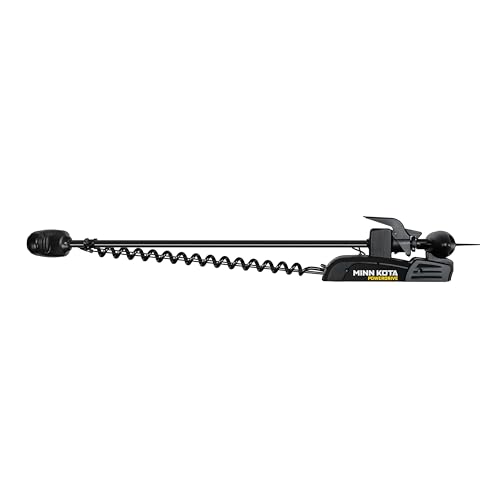
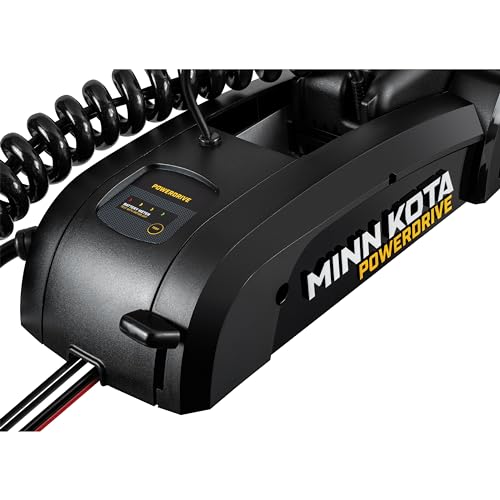
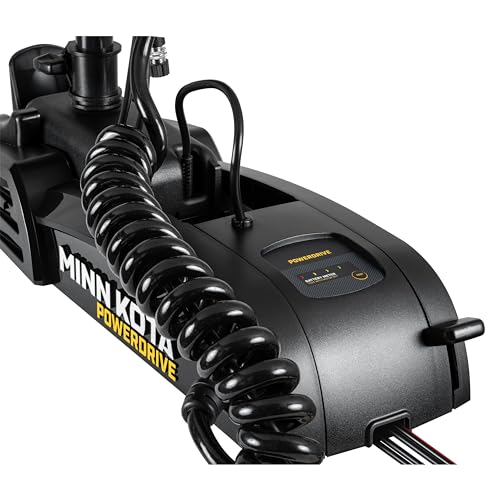
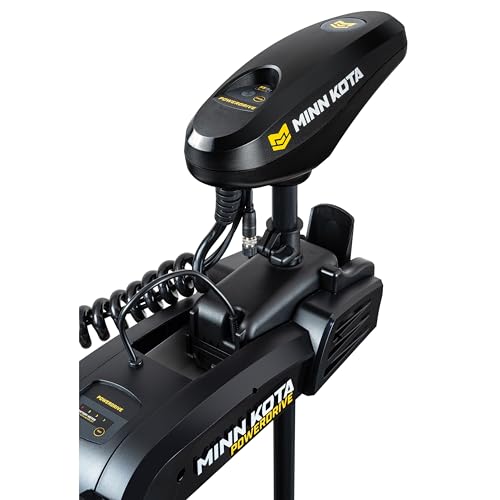
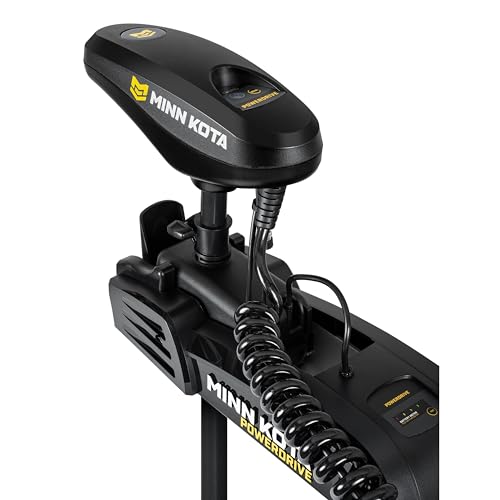
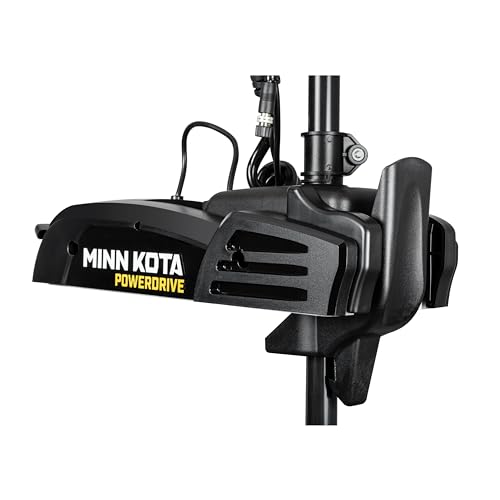
As an Amazon Associate I earn from qualifying purchases.
Minn Kota PowerDrive at a Glance
Sources: the Amazon listing (L), Minn Kota’s PowerDrive specifications page and manual (M), and Minn Kota’s help center articles on battery selection and circuit breakers and wiring (C).
| Spec | Minn Kota PowerDrive with GPS, 55 lb, 54 in shaft (model 1358451) |
|---|---|
| Thrust and voltage | 55 lb, 12 V (L) |
| Shaft | 54 in, composite (L) |
| Mount and steering | Bow mount, electric steering (L) |
| GPS functions | Spot-Lock, drift mode, follow mode, dodge mode (L) |
| Controls | Micro remote in the box (L); not compatible with a foot pedal (M) |
| In the box | Motor, micro remote, MKP-37 propeller, mounting hardware (L) |
| Propeller | Power Prop (L) |
| Battery meter | Built in (L) |
| Water type | Freshwater (M); one listing spec field says “For Salt Water” (L) |
| Weight | 44 lb shipping weight (M) |
| Warranty | 2 years (L) |
What We Like
- Spot-Lock on a 12 V bow mount. According to the Amazon listing, it holds position by GPS and adds drift, follow, and dodge modes, all on one 12 V battery.
- Simple deploy and stow. According to the listing, you push the Deploy-Assist lever to put the motor in the water, and it stows “easily and securely” when you move.
- Composite shaft. The listing names a composite shaft paired with a Power Prop that it says “excels in open water.”
- Battery meter on the motor. The listing describes a meter you press to check charge, handy on a long day away from the ramp.
What Could Be Better
- No foot pedal option. The listing description mentions pedal operation, but Minn Kota says PowerDrive motors with Advanced GPS cannot use a foot pedal.
- Freshwater only. Minn Kota lists it as a freshwater motor, even though one listing spec field says salt water.
- Fewer listed extras than the Terrova. No heading sensor in the box list, and no mention of a Spot-Lock jog or path recording.
- No motor weight in the listing. Minn Kota gives only a 44 lb shipping weight, which includes packaging, so ask the seller if the motor weight matters for lifting it on and off the bow.
- Shorter warranty. The listing gives 2 years, against three years with registration on the Terrova listing.
Spot-Lock and GPS Modes
The listing calls the system an “Advanced GPS Trolling System” that sets Spot-Lock to hold your position and controls speed and steering. If GPS anchoring is new to you, start with our explainer on what Spot-Lock does; the short version is that the motor steers and throttles by itself to keep the boat over one spot, with no anchor rope in the water.
That is the feature most buyers want from this motor. Hold on a rock pile while you work it with a jig, sit off a dock line in wind, or stay over a deep weed edge where an anchor would foul. The listing also names three more modes: drift mode, follow mode, and dodge mode. It does not explain how each one behaves on the PowerDrive, so read the manual for your motor’s serial number before you lean on them.
Two GPS details are missing from this listing that appear on the Terrova listing: the ability to jog a locked position 5 ft, and path recording. The Terrova’s box list also includes a heading sensor; the PowerDrive’s does not name one. Minn Kota sells the heading sensor separately for the GPS PowerDrive, and its PowerDrive feature list does not include path recording, so check the manual with model number 1358451 before you count on jog or saved tracks.
Foot Pedal or Remote
The listing description reads: “Choose between operation with either a foot pedal or a Minn Kota micro remote.” The package line, though, lists the motor, the micro remote, the MKP-37 propeller, and mounting hardware, and the Included Components field reads “PowerDrive 55 lb. 54″ shaft trolling motor; Micro Remote; Mounting Hardware.” Minn Kota’s specifications page settles it: PowerDrive motors equipped with Advanced GPS Navigation are not compatible with a foot pedal, and the models sold with a foot pedal do not include Advanced GPS and cannot be upgraded to it. The pedal line in the listing describes the PowerDrive family, not this GPS model.
That matters for how you fish. A bass angler on a casting deck often steers with a foot so both hands stay on the rod. A crappie angler who moves around a pontoon or a wide jon boat may prefer a remote that goes where they go. If you want to steer with your feet, this GPS model is the wrong choice. The listing never uses the name i-Pilot, so do not assume an older i-Pilot remote will pair with it.
Power and Wiring on 12 V
The listing gives 12 V and 55 lb of thrust, so one battery runs it. Whether 55 lb is enough depends on your hull, load, wind, and current; check how much thrust your boat needs, and read up on 12 V and 24 V systems if you are close to the line.
Minn Kota’s help center says to use a deep cycle marine battery, not a starting battery, and suggests a minimum amp-hour rating; take that figure from the manual for your motor. For lithium, follow the battery maker’s instructions and your motor’s manual. For wiring, the help center recommends a circuit breaker or inline fuse near the battery’s positive terminal, and breaker size and wire gauge depend on the motor and the length of the run. Take those figures from your motor’s manual or a qualified marine technician, not from this review. Our guide to sizing a trolling motor battery covers capacity in more depth.
The chart also recommends following recognized marine wiring standards, says altering boat wiring should be done by a qualified marine technician, and suggests contacting one if your wire extension runs more than 25 ft. If a cranking battery starts your outboard, it recommends a separate deep cycle battery for the trolling motor. It says not to switch the motor on until the propeller is in the water and to disconnect the motor when it is not in use or while the battery charges.
The listing credits Digital Maximizer with run time “up to 5x longer” on a charge without saying compared with what, so treat it as a description of variable speed rather than a run time figure. The battery meter is the more practical feature: check it before you run to the far end of the lake.
Mounting and Deploying
This is a bow mount that bolts to the deck with the included hardware. If you have not settled on bow mount versus transom mount yet, do that first, because a bow motor means drilling the deck and running power forward. The 54 in shaft has to suit your bow height, so measure shaft length from your own deck before ordering.
If you want the motor to lift off its base between trips, our roundup of the Minn Kota quick release bracket options covers fit by motor; check each bracket listing’s motor list against your exact model before you buy.
According to the listing, deploying takes a push of the Deploy-Assist lever to drop the motor into the water, and it stows “easily and securely” when you move. Follow the installation instructions that come with the motor, and leave wiring changes beyond them to a marine technician.
Freshwater or Salt Water?
The listing title ends in “Freshwater,” but its Recommended Uses field reads “For Salt Water.” Minn Kota settles it: model 1358451 sits in its freshwater PowerDrive line, separate from the saltwater Riptide PowerDrive, and the owner’s manual says the series is not equipped for saltwater exposure and that the freshwater warranty does not apply to motors used in saltwater or brackish water. If you fish brackish or salt water, buy a model the maker clearly rates for it, and read our guide on whether you can use a freshwater trolling motor in saltwater.
How It Compares
The obvious alternative is the Minn Kota Terrova with the same thrust, voltage, and shaft length. Figures come from the two Amazon listings unless marked “per Minn Kota.”
| Listing detail | PowerDrive 55 (this review) | Terrova 55 |
|---|---|---|
| Thrust, voltage, shaft | 55 lb, 12 V, 54 in | 55 lb, 12 V, 54 in |
| GPS modes listed | Spot-Lock, drift, follow, dodge | Spot-Lock with 5 ft jog, drift, follow, dodge, path recording |
| Remote in the box | Micro remote | Wireless remote with LCD screen |
| Heading sensor in box list | Not listed | Yes |
| Foot pedal | Not compatible with GPS models, per Minn Kota | Optional accessory on select models, per Minn Kota |
| Propeller | Power Prop, MKP-37 | Weedless Wedge 2, MKP-32 |
| Deploy lever | Deploy-Assist | One-touch, fall-away ramps |
| Material | Material field says Aluminum; features name a composite shaft | Material field says Aluminum; shaft material not named |
| Shipping weight | 44 lb, per Minn Kota | 46 lb, per Minn Kota |
| Warranty | 2 years | Three years with registration |
Choose the PowerDrive if you want Spot-Lock on a 12 V bow mount and are fine with the micro remote. Choose the Terrova if the LCD remote, the heading sensor in the box, saved paths, and the longer warranty matter more. The two listings also describe different propellers: the Terrova’s Weedless Wedge 2 for pushing through vegetation, the PowerDrive’s Power Prop for open water, so think about how weedy your water is. Our Minn Kota Terrova review covers that motor in detail.
Who Should Look Elsewhere
- You fish salt water. Minn Kota lists this model for fresh water; pick a motor the maker rates for salt water.
- You want saved GPS tracks or a fine Spot-Lock jog. The Terrova listing names both; this one does not.
- You want foot pedal steering. Minn Kota says the GPS PowerDrive cannot use one.
- Your boat is heavy or you fight strong current. Look at a 24 V motor with more thrust.
- You fish from a kayak or canoe, or will not drill your deck. A 54 in bow mount is the wrong tool; a transom motor clamps on.
Why You Should Trust Us
We do not conduct our own product trials; our picks draw on published specifications, independent reviews, and Amazon owner ratings, which also set each product’s AnglerTechLab Score. Commissions never change a score or a verdict. This motor’s score carries a small editorial deduction because its listing contradicts itself on water type (freshwater in the title, salt water in a spec field) and describes foot pedal operation that Minn Kota says this GPS model does not support; the method is on our How We Review page. More motors are in our trolling motors section.
Final Verdict
The Minn Kota PowerDrive trolling motor in its 55 lb, 54 in GPS form suits a small to midsize freshwater boat on one 12 V battery when Spot-Lock is the main goal and the micro remote is enough control. If you want saved tracks, an LCD remote, and a heading sensor listed in the box, the Terrova is the closer fit. Salt water anglers and paddlers should look elsewhere.
Frequently Asked Questions
Does the Minn Kota PowerDrive have Spot-Lock?
Yes. This Minn Kota PowerDrive with Spot-Lock holds position by GPS and adds drift, follow, and dodge modes, according to the listing.
Does the Minn Kota PowerDrive come with a foot pedal?
No. Minn Kota says PowerDrive motors with Advanced GPS, like this one, are not compatible with a foot pedal; the PowerDrive models sold with a foot pedal do not have GPS.
How do you turn on a Minn Kota PowerDrive trolling motor?
The listing does not describe the power-on steps, so follow the manual for your serial number. Minn Kota’s battery guidance adds one rule for its motors: do not switch the motor on until the propeller is in the water.
How do you deploy a Minn Kota PowerDrive trolling motor?
Per the listing, you push the Deploy-Assist lever to lower the motor into the water, and the same lever stows it when you move.
How do you mount a Minn Kota PowerDrive trolling motor?
It bolts to the bow with the mounting hardware in the box. Check that the 54 in shaft suits your bow height, follow the included installation instructions, and use a qualified marine technician for wiring changes, as Minn Kota’s chart recommends.
Does the PowerDrive use i-Pilot?
This listing never mentions i-Pilot; it describes an Advanced GPS Trolling System run from a micro remote. If you need a specific remote system, confirm compatibility with Minn Kota using model number 1358451. Do not go by the older Minn Kota PowerDrive V2 either: Minn Kota’s help center guide covers the V2 as an earlier generation with its own remote options, while model 1358451 appears on the current Advanced GPS specifications page linked above.
About the author

Brent Curtis enjoys chasing largemouth bass on Alabama lakes, especially around submerged structures and weed beds. He uses side-imaging fish finders and GPS trolling motors to locate fish, hold his boat in position, and explore productive fishing spots.