
Deeper vs Striker Cast: Which Castable Sonar Fits How You Fish
Deeper vs Striker Cast: how the Deeper PRO+ 2 and Garmin Striker Cast differ on GPS mapping, connection, depth, battery, and use from shore, kayak, and ice.
 Updated October 31, 2026

Deeper vs Striker Cast comes down to mapping, depth, and how you connect. The Deeper PRO+ 2 has built-in satellite positioning for drawing lake maps from shore, three sonar beams, a listed depth range to about 330 ft, and its own Wi-Fi link to your phone. The Garmin Striker Cast without GPS is the Bluetooth option: two frequencies, a 150 ft depth limit, a tether in the box, the longer battery figure of the two, and the lower weight on the two Amazon listings. If you cast from the bank and want a map of that water, lean toward the Deeper. If you want depth, temperature, and a flasher view on a kayak or through the ice and do not need your own maps, the Garmin fits.
This comparison is based on research, not our own trials.
This guide is general product information, not repair or electrical safety advice. Follow the installation, wiring, and charging instructions in your product’s manual, stop using any battery, charger, or electronics that overheat, swell, or smell of burning, and contact the manufacturer.
The Two Castables in This Comparison
We compare the Deeper PRO+ 2 with the Garmin Striker Cast (part 010-02246-00), the version without GPS, so the biggest practical gap, built-in positioning, stays in plain view. Garmin’s Striker Cast GPS and the simpler Deeper Start come up below where they change the answer.
The score on each card is its AnglerTechLab Score, calculated with the published method on our How We Review page; it is one factor in how we describe a product, not the result of a head-to-head comparison. Each score includes a 0.2 editorial deduction because its Amazon listing describes a display the product does not have: the Deeper listing gives a 2.4 in OLED or small LCD display, and the Garmin listing names an LCD, while both sonars show their readout on your phone.
We earn a commission from qualifying purchases made through links on this page. Commissions never affect our rankings or AnglerTechLab Scores.

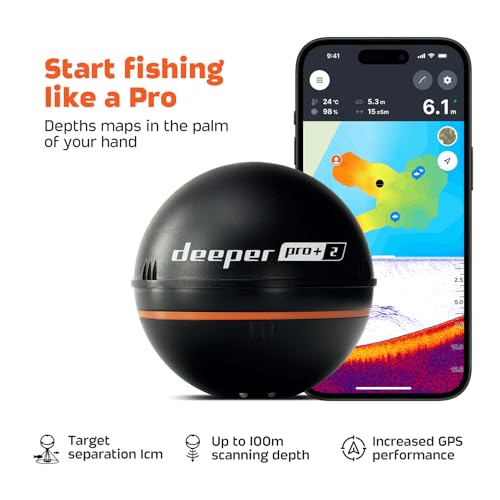
Deeper PRO+ 2 Castable Sonar


As an Amazon Associate I earn from qualifying purchases.

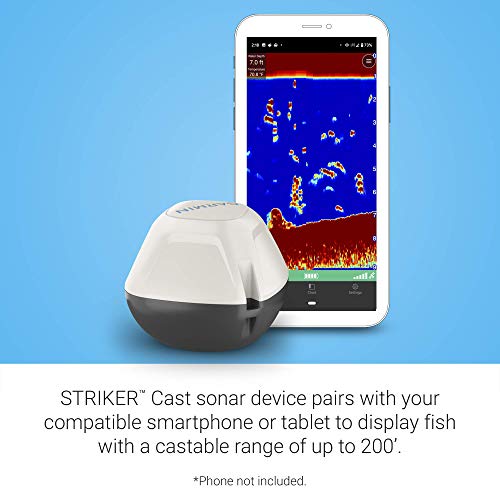
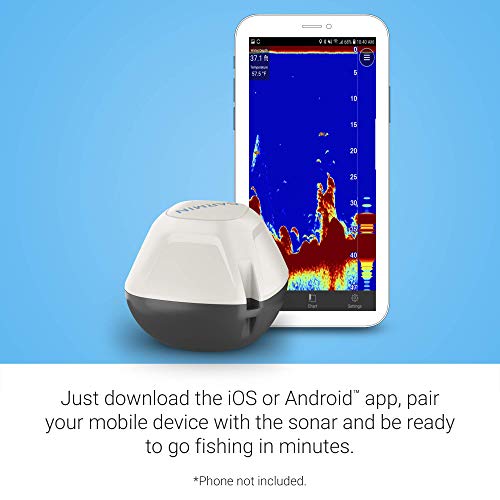
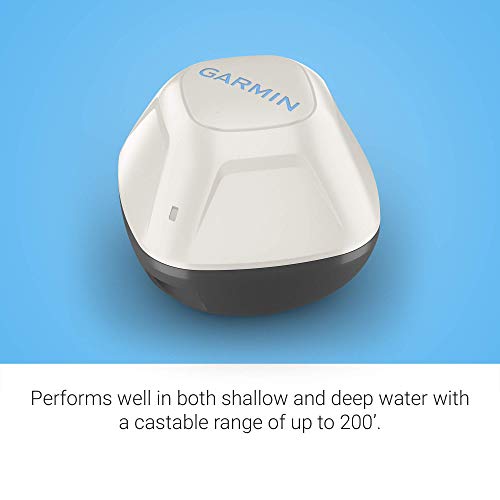
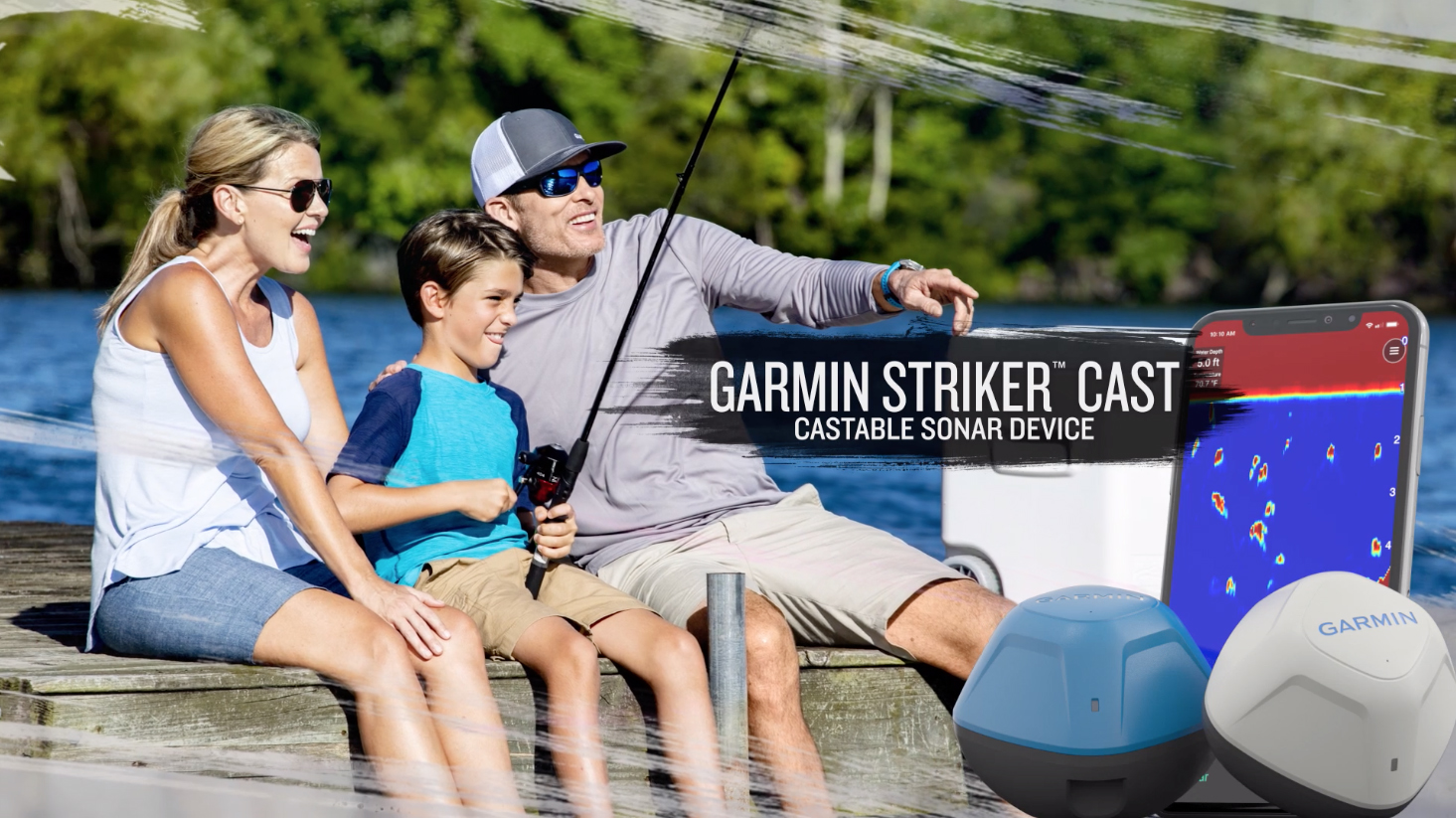
Garmin Striker Cast Castable Sonar



As an Amazon Associate I earn from qualifying purchases.
Deeper vs Striker Cast: Specs Side by Side
Sources: Deeper’s PRO+ 2 page, Garmin’s Striker Cast page, the STRIKER Cast owner’s manual, and the two Amazon listings. Each cell uses the maker’s figure unless it says otherwise.
| Feature | Deeper PRO+ 2 | Garmin Striker Cast (no GPS) |
|---|---|---|
| Link to your phone | Its own Wi-Fi, no cellular data needed; stable connection up to 100 m | Bluetooth; 60 m (200 ft) wireless range, which water conditions can affect |
| Positioning and maps | GPS, GLONASS, Galileo, BeiDou, QZSS; draws lake maps from boat, kayak, shore, dock, or bank | No GPS; can download shared Quickdraw Community maps but cannot record its own |
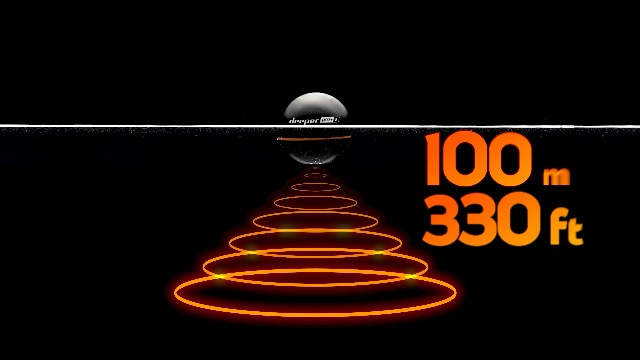
| Depth range | 15 cm to 100 m (about 6 in to 330 ft) | Under 2 ft to 150 ft |
| Beams | Three cones: 47 degrees at 100 kHz, 20 degrees at 240 kHz, 7 degrees at 675 kHz | Two oval beams: 22 x 63 degrees at 260 kHz, 9 x 14 degrees at 455 kHz |
| Ice view | Sold for use as an ice fishing flasher | Ice fishing flasher view in the app |
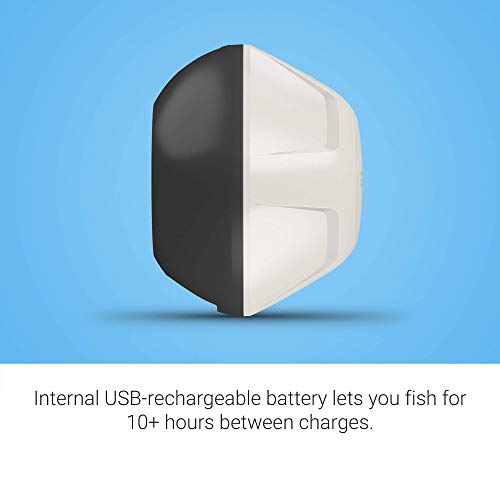
| Battery | 950 mAh lithium-ion, up to 9 hours; 80% in 45 minutes, full in 75 minutes | Built-in lithium-ion, 10 hours typical; about 1.5 hours to charge |
| Temperature | Operates from -4°F to 104°F; no separate charging range on the page | Operates from -4°F to 140°F; charges from 41°F to 104°F |
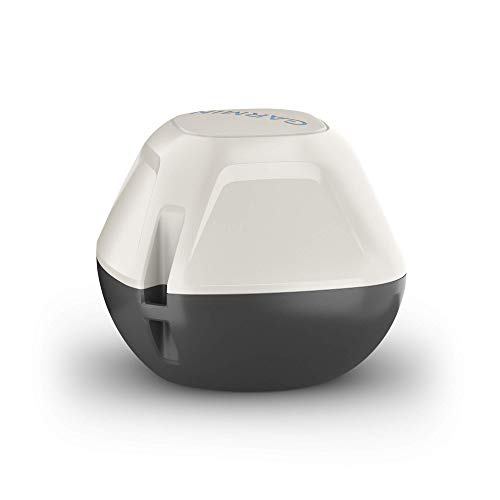
| Weight | 3.2 oz (per the listing; Deeper’s page gives none) | 2.6 oz (75 g); the listing gives 75 g |
| In the box | Sonar, USB cable, neoprene pouch, two attachment bolts, quick guide | Sonar, carrying bag, 16.4 ft tether, USB cable, documentation |
| Warranty | 2-year limited | 2-year limited (per the listing) |
GPS and Mapping: The Clearest Difference
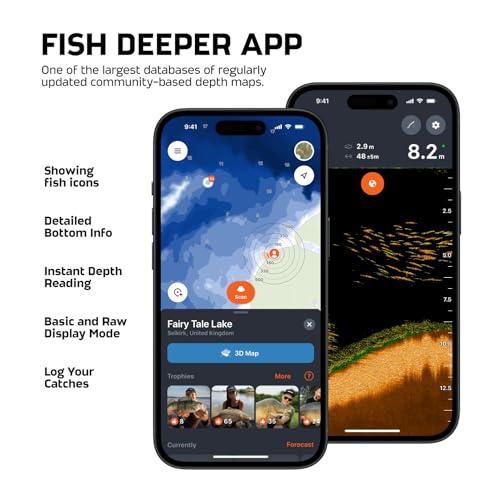
Deeper’s page says the PRO+ 2 can create lake maps “from the boat or kayak and even the shore, dock or bank”: you cast out and reel in, and the maps are saved to the Fish Deeper app and reachable on any device. For a bank angler on a pond with no boat ramp, that means a depth map of water you can only reach with a cast.
The Striker Cast without GPS cannot record a map. Per the manual, Quickdraw Contours recording needs sonar depth and GPS position, so only GPS models record; this version can download contour maps other anglers have shared in the Garmin Quickdraw Community. If you want Garmin’s castable and your own maps, the Striker Cast GPS adds the receiver, and Garmin’s GPS version page lists WAAS support and 5,000 waypoints. One owner of the version without GPS skipped the upgrade because the phone already shows a map, though that map draws no contours.
Connection: Garmin Bluetooth or Deeper’s Own Wi-Fi
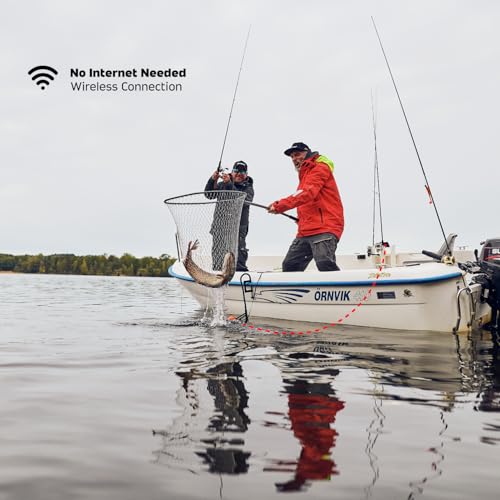
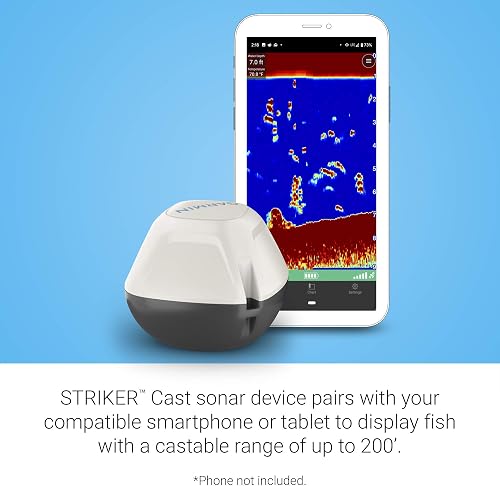
The two units reach your phone differently. Deeper says the PRO+ 2 generates its own Wi-Fi signal, with no cellular data needed, and lists a stable connection up to 100 m. Garmin’s link is Bluetooth with a 60 m (200 ft) range that, per its manual, water conditions can affect.
Both apps are free, per Garmin and the Deeper listing. Garmin’s manual adds two details worth knowing before the first trip: the app asks you to sign in to a Garmin account, and it pairs with only one unit at a time. One Garmin owner rates the connectivity “less than great” and suspects it falls short of 200 ft, so plan shorter casts until you see how it holds on your water.
Depth and Beams: Shallow Bays or Deep Basins
Garmin lists the Striker Cast from under 2 ft to 150 ft. Deeper lists the PRO+ 2 from 15 cm to 100 m, so on paper it reads more than twice as deep. In a farm pond or a weedy bay, both cover the water. On a deep reservoir where you need readings past 150 ft, only the Deeper is rated for it.
Deeper pitches its 47 degree beam for covering water, the 20 degree beam for working a spot, and the 7 degree beam for detail. Garmin’s manual pairs the wider 260 kHz beam with searching and deep water, and the narrower 455 kHz beam with rough water and bottom detail.
Battery, Charging, and Cold Weather
Garmin lists 10 hours in typical use and a charge time of about 1.5 hours. Deeper lists up to 9 hours, depending on usage, with a fast charge to 80% in 45 minutes and a full charge in 75 minutes. The runtime figures are worded differently, so treat them as close.
For hard water, both list operation down to -4°F, but Garmin charges only from 41°F to 104°F, so let a cold Striker Cast warm up and dry before plugging it in; the manual warns that moisture on the contacts can cause corrosion. Deeper’s page lists no separate charging range.
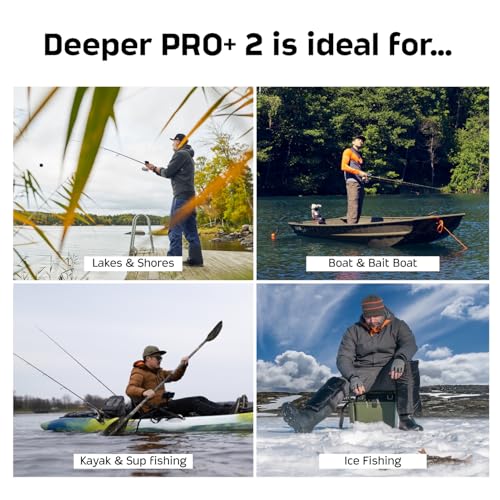
Shore, Kayak, and Ice: Fitting Each One to Where You Fish
From shore. Garmin is specific about the rig: a medium-action or heavier rod, line of 20 lb or more, and a #3 snap barrel swivel, and the manual calls repeated casting the recommended way to use it. Deeper’s product page does not give line or rod guidance, so check its quick guide before the first cast.
From a kayak. The Garmin ships with a 16.4 ft tether, and its manual recommends towing behind canoes and kayaks but not behind power boats underway, with a caution that towing above 5 mph, or in choppy water, can lead to poor sonar readings and injury. Deeper says the PRO+ 2 installs on a kayak “in seconds,” lists its Flexible Arm Mount as a compatible accessory, and, for small boats, recommends trolling at a low speed of 3 kph (about 1.9 mph). No tether appears in Deeper’s box list.
Through the ice. Deeper sells the PRO+ 2 as an ice fishing flasher for hole hopping with “no transducer or wires”: drill, drop, and watch. Garmin’s app has a flasher view that shows returns on a circular depth scale. One Garmin owner found that it picks up interference near other sonar, which matters on a crowded flat.
What Deeper PRO+ 2 Owners Say
From owner reviews on the PRO+ 2’s Amazon listing only: three owners describe using it on the ice, and one of them has used it from the bank and through the ice for two years and says the battery lasts all day. Two praise the GPS mapping and the accuracy of saved spots. Casting it takes real gear: two owners use a dedicated rod with heavy braid, and one of them snapped the line on a cast and sent the unit far into the lake; a third casts it on a catfish rod. The owner who lost it on a cast also reports occasional dropped connections and false fish marks from paddle churn when it is mounted beside a kayak. One owner reports that two units in a row stopped charging and stopped broadcasting Wi-Fi, the second after its warranty had run out.
What Striker Cast Owners Say
From owner reviews on Garmin’s listing for the version without GPS only: one owner calls the water temperature and depth accurate. A kayak angler in clear water about 9 ft deep found those two readings reliable but saw marks on screen for things that were not there, a reason to treat fish symbols as a hint. Another notes that the end of the charging cable that plugs into the unit is not a standard USB connector, and advises keeping the cable somewhere safe.
Which Should You Buy?
- You fish from the bank and want a map of that water, or fish deeper than 150 ft: the Deeper PRO+ 2, which Deeper says maps from shore, dock, or bank and rates to 100 m. Skip it if you only need depth and temperature on water you already know.
- You fish from a kayak and want a tether in the box: the Garmin Striker Cast, with its tether, carrying bag, and towing guidance in the manual. Skip it if you want to record contours; that takes the Striker Cast GPS.
- You hop holes on the ice: either works. Choose the Deeper if you want the narrower 7 degree beam over a single hole (Garmin’s narrowest is 9 x 14 degrees), or the Garmin for the lower listed weight and longer runtime figure. Skip the Garmin if you cannot charge it above 41°F.
- You want the simplest Deeper: the Deeper Start, which Deeper’s Start page lists with a single 40 degree beam, a 50 m (165 ft) range, and no GPS. Skip it for ice fishing: that page does not mention ice use and rates it from 32°F.
Our Garmin Striker Cast review covers that unit in more depth, our list of the best ice fishing fish finders compares both with flashers and portable kits, and our roundup of the best fish finders covers mounted units. The fish finders section collects everything else we cover.
Why You Should Trust Us
We do not conduct our own product trials. This comparison draws on Deeper’s product pages, Garmin’s Striker Cast pages and owner’s manual, the two Amazon listings, and owner reviews on both Amazon listings. Each AnglerTechLab Score starts from Amazon owner ratings. We earn a commission from qualifying purchases, and commissions never affect our rankings, recommendations, or scores. You can read the full method on our How We Review page.
Frequently Asked Questions
Is the Deeper PRO+ 2 better than the Garmin Striker Cast?
Not across the board: the Deeper for maps from shore or readings past 150 ft, the Garmin for a tether in the box and the longer runtime figure.
Do these castable sonars need cell service?
Deeper says the PRO+ 2 makes its own Wi-Fi and needs no cellular data to connect. Garmin’s manual does not say whether sonar streaming needs a cell signal; it does say a software update needs a stable internet connection, so update and sign in to your Garmin account at home.
Can you use the Deeper or the Striker Cast for ice fishing?
Yes. Both are sold with a flasher view for the ice and list operation down to -4°F.
About the author

Mason McKinney enjoys fishing Minnesota's lakes for crappie, walleye, and other freshwater species. He uses forward-facing sonar, GPS fish finders, and spot-lock trolling motors to locate fish around underwater structures and maintain precise boat positioning.