
12V vs 24V Trolling Motor: Thrust, Batteries, and Wiring Compared
12V vs 24V trolling motor: how voltage changes thrust, battery count, current draw, wire and breaker needs, and which boats each system suits.
 Updated November 3, 2026
In the 12V vs 24V trolling motor decision, voltage is mostly a consequence of how much thrust your boat needs. A 12-volt motor runs on one battery, keeps weight and wiring simple, and covers kayaks, canoes, jon boats, and most small boats; in Newport’s lineup, every model up to 62 lb of thrust is 12-volt. A 24-volt motor runs on two 12-volt batteries in series (or one 24-volt battery) and delivers more thrust from the same current, which suits heavier boats, wind, and current. Newport’s 86 lb model is its 24-volt option, and Newport’s chart lists that class for boats of 16 ft and up, estimated for typical light craft. Pick the thrust first, then accept the voltage that motor requires.
What you cannot do is change a motor’s voltage by rearranging batteries. Each motor is built for the input its maker lists, as the FAQ at the end explains.
This guide is general product information, not repair or electrical safety advice. Follow the installation, wiring, and charging instructions in your product’s manual, stop using any battery, charger, or electronics that overheat, swell, or smell of burning, and contact the manufacturer.
The Two Example Motors
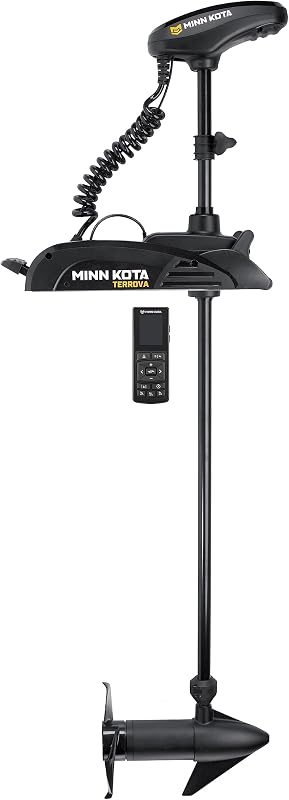
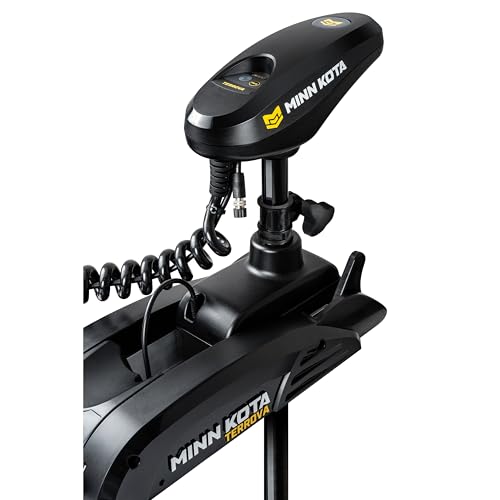
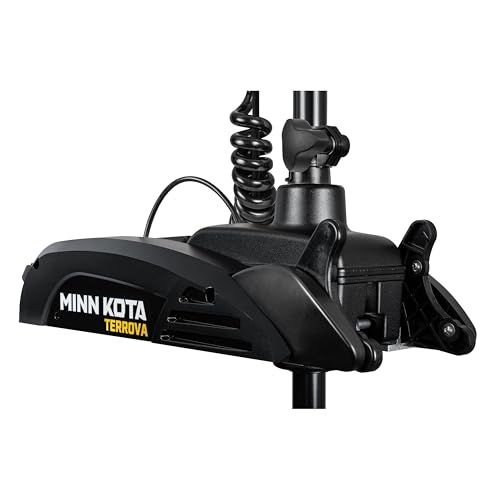
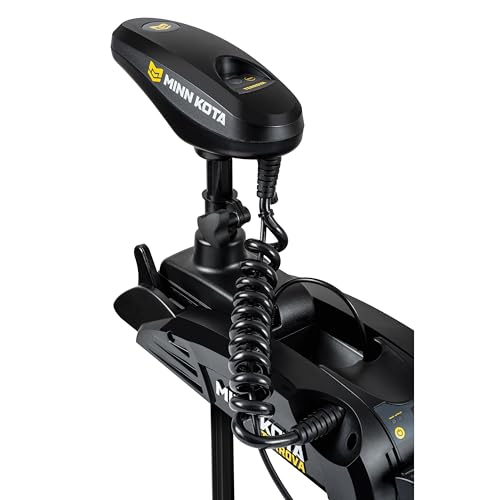
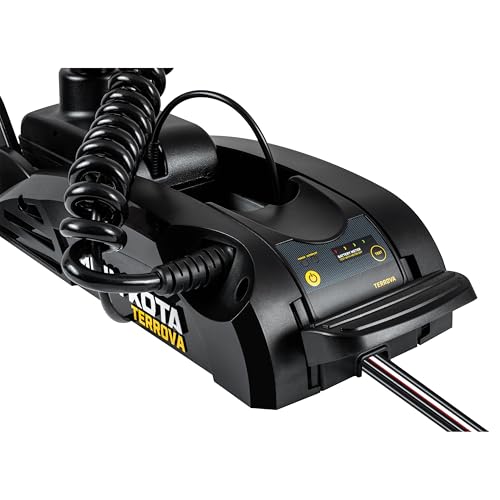
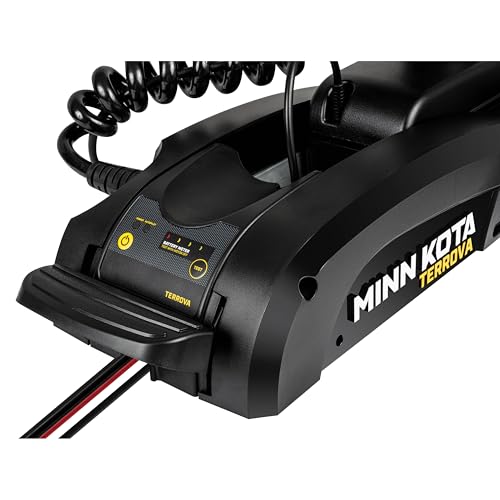
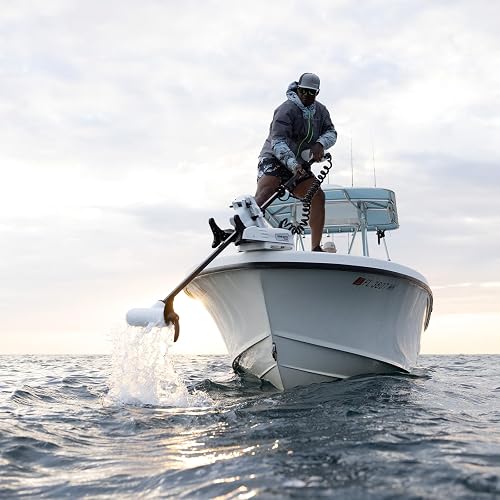
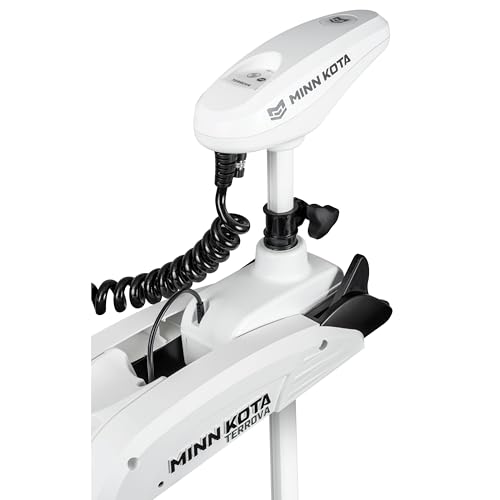
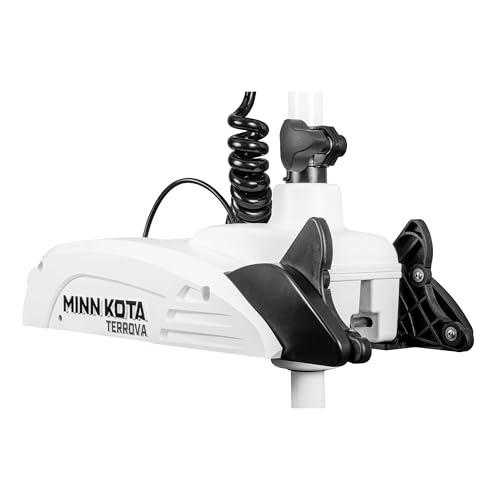
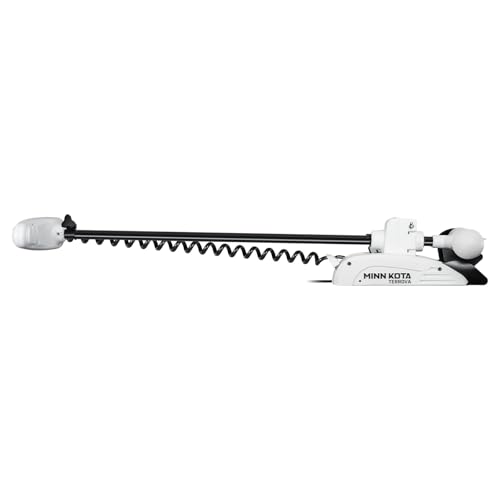
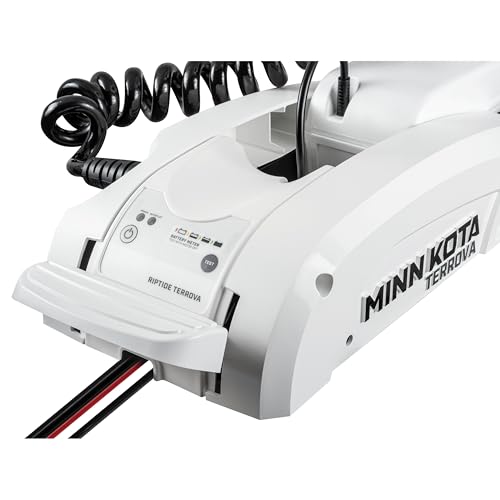
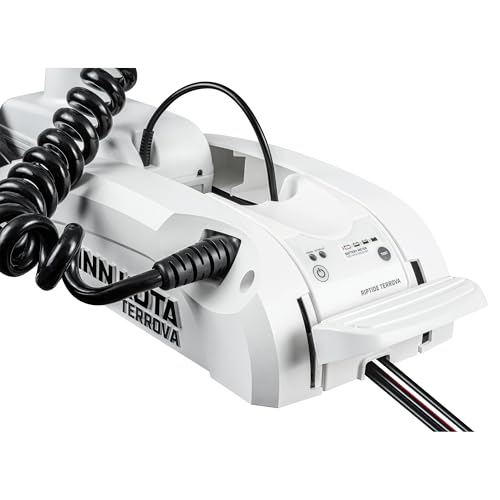
We use two bow mounts from the same Minn Kota family that differ mainly in voltage and thrust: the Terrova 55, a 12-volt freshwater model, and the Riptide Terrova 80, a 24-volt saltwater model, both per their Amazon listings. They illustrate the two systems and are not a ranking. Their figures come from the listings, checked against Minn Kota’s Terrova and Riptide Terrova specifications page, which lists both as current models and confirms 12 volts for its 55 lb Terrova motors and 24 volts for its 80 lb motors. The score on each card is its AnglerTechLab Score, calculated with the published method on our How We Review page.
We earn a commission from qualifying purchases made through links on this page. Commissions never affect our rankings or AnglerTechLab Scores.

Minn Kota Terrova 55 Bow-Mount Trolling Motor with GPS



As an Amazon Associate I earn from qualifying purchases.

Minn Kota Riptide Terrova 80 Saltwater Bow-Mount Trolling Motor with GPS




As an Amazon Associate I earn from qualifying purchases.
12V vs 24V Trolling Motor: Side by Side
Sources: Newport’s NV Series page, Newport’s battery recommendations, Newport’s thrust and boat length chart, the Newport Kayak Series owner’s manual, the Garmin Force Current installation instructions, the Garmin Force installation instructions, the Garmin Force owner’s manual, the Garmin Force Current owner’s manual, and the two Amazon listings.
| Feature | 12-volt system | 24-volt system |
|---|---|---|
| Batteries | One 12 V battery; two in parallel stay at 12 V and add capacity (per the Newport manual) | Two 12 V batteries wired in series, or one 24 V lithium battery, though Newport says it does not recommend lithium with its motors |
| Thrust in Newport’s lineup | 36, 46, 55, and 62 lb models | 86 lb model |
| Same motor at each voltage (top speed setting, per its owner’s manual) | Garmin Force Current: 36.8 lb of thrust at 33.9 A (12.8 Vdc) | Garmin Force Current: 56.0 lb of thrust at 32.8 A (25.6 Vdc) |
| Maximum power consumption at the same 40 A input (Force Current) | 512 W at 12.8 Vdc | 1024 W at 25.6 Vdc |
| Boat size in Newport’s chart (estimated for typical light craft) | 55 lb: 12 to 16 ft; 62 lb: 14 to 16 ft | 86 lb: 16 ft and up |
| Example motor | Terrova 55: 55 lb, 54 in shaft, freshwater (per the listing) | Riptide Terrova 80: 80 lb, 60 in shaft, saltwater (per the listing) |
Why Voltage Changes Thrust
Electrical power is volts multiplied by amps. A motor that can only carry a certain current makes more power, and more thrust, when the voltage goes up. Garmin’s Force Current shows this cleanly because it accepts either voltage. Its installation instructions list “40 A continuous” input and a maximum power consumption of 512 W at 12.8 Vdc and 1024 W at 25.6 Vdc: the same current, twice the power. The thrust table in the Force Current owner’s manual shows the result: at the top speed setting, 36.8 lb of thrust at 33.9 A on 12.8 Vdc and 56.0 lb at 32.8 A on 25.6 Vdc, with Garmin’s high efficiency propeller in relatively calm water and tolerances of plus or minus 5 lbf and 5 A.
The pattern continues above 24 volts. The Garmin Force owner’s manual lists 80 lbf at 57 A at full throttle on a 24.0 Vdc source and 100 lbf at 54 A on 36.0 Vdc, assuming Garmin’s high-efficiency propeller, relatively calm water, and a motor deep enough not to ventilate. How much thrust your hull needs is worked out in our guide on what size trolling motor do I need.
Batteries, Weight, and Run Time
A 12-volt motor needs one battery; Newport’s manual shows a second one added in parallel when you want more running time at the same voltage. A 24-volt motor needs two 12-volt batteries in series or a single 24-volt battery. Newport lists the lithium option but says, “we do not recommend this,” citing the LED battery meters on its motors, and its Kayak Series manual says the meter reading cannot be trusted on lithium. Two lead-acid batteries roughly double the weight and floor space of one, which matters more in a 14 ft aluminum boat than on an 18 ft deck boat, so check that the hull has room and that the added weight stays under its maximum load.
Newport puts run time in one line: “Amp-hours will determine the run time of the motor.” Two 12-volt batteries in series make 24 volts and keep the amp-hour rating of one battery, so the bank holds about twice the energy of a single battery. Whether that is enough depends on the current your motor draws; the formula and worked examples are in our guide on how long does a 12 volt trolling motor last, and capacity choices are covered in what size battery for trolling motor.
Owner reviews on the 24-volt example’s listing mention these boats and setups. One Riptide Terrova 80 owner says it trolls all day on an 18 ft Bayliner with two 100Ah batteries and holds position without an anchor. Another says it handles their Carolina Skiff 21LS and was easy to install on their own. Not every report is positive: one owner says the motor lost propeller power after four fishing trips; they mention running lithium batteries.
Current Draw, Wire, and Breakers
Current is what heats wires and trips breakers, so voltage affects the wiring a motor needs. A 12-volt motor making real thrust pulls a lot of current: the Newport Kayak Series manual lists 52 A for its 55 lb model. Higher current calls for heavier wire, especially on longer runs, and that is a spec to take from the manual for your exact model. Newport’s own documents do not agree on wire size for extensions: its trolling motor FAQ and its Kayak Series manual name different gauges for the same motors, so follow the manual that came with your motor or ask Newport. A heavier wire than the minimum (a lower AWG number) is the safer side. For the Force, Garmin’s installation instructions give a minimum gauge for extensions up to 30 ft and list heavier wire as optimal for longer extensions.
Breakers follow the same rule. Newport recommends a manual reset breaker on the positive wire within 72 inches of the battery, and Garmin specifies a breaker rating for each motor: 40 A continuous for the Force Current and 60 A continuous for the Force. Breaker size depends on the model and how the motor is installed, so follow the manual for your motor; the Garmin Force Current owner’s manual, for example, lists a different maximum for some configurations. Newport’s own pages give two different ratings: its trolling motor FAQ says the 86 lb motor is “rated for 50A” and recommends a 50 amp breaker for the 46, 55, and 86 lb motors, while its NV Series page lists 60A for the 55, 62, and 86 lb versions. The NV Series and Kayak Series manuals we read give no rating, so go by the label or paperwork that came with your motor, or ask Newport which rating applies, rather than picking a number from either page. For other motors, use the exact rating in your model’s manual, not a larger or smaller one.
Wiring a single 12-volt battery and a 24-volt series bank are different jobs. Follow the wiring diagram in your motor’s manual, or have a qualified marine installer do the work, which Garmin recommends for its installations. Newport’s manual says to disconnect power before working on the propeller, and Garmin’s says to disconnect the battery before handling the propeller or the electrical connections.
Who Should Skip Each System
Skip 24 volts if you paddle a kayak or canoe, run a small jon boat on calm water, or have room for only one battery. The second battery adds weight, space, and charging, and a 12-volt motor usually covers that boat; Newport’s chart pairs its 36 lb motor with 8 to 12 ft boats.
A 12-volt motor isn’t for you if you need more thrust than the low-60s in pounds that Newport’s 12-volt line tops out at, for example a heavy boat that fishes wind and current most days. The bow mounts above 60 lb in this comparison run on 24 or 36 volts: the Garmin Force, and the Riptide Terrova 80 per its listing.
Which Should You Buy?
- Kayak, canoe, or inflatable: 12 volts, on one battery.
- Jon boat or aluminum boat from 12 to 16 ft: usually 12 volts, in the 40 to 62 lb range Newport’s chart lists for 12 to 16 ft boats.
- Heavier boat, or regular wind and current: 24 volts, such as the 80 lb Riptide Terrova 80 for salt water. In Newport’s chart, 16 ft and up starts at its 86 lb, 24-volt motor.
- Kayak angler who wants the option of both: a dual-voltage kayak motor such as the Garmin Force Current, which its instructions say must connect to a 12 or 24 Vdc battery.
Voltage is separate from where the motor sits on the boat; for that choice, see bow mount vs transom mount. More guides are in the trolling motors section.
Why You Should Trust Us
We do not conduct our own product trials. This comparison draws on Newport’s and Garmin’s manuals, installation instructions, and product pages, which we opened and read, on the Amazon listings for the two Minn Kota example motors, and on the owner reviews published on the 24-volt motor’s listing; we checked those motor figures against Minn Kota’s help center. Each AnglerTechLab Score starts from Amazon owner ratings using the published method, and we made no editorial adjustment to either score. We earn a commission from qualifying purchases, and commissions never affect our recommendations or scores. The full method is on our How We Review page.
Frequently Asked Questions
Can you run a 24V trolling motor on 12V?
Only if its manual lists 12 volts as a supported input. Garmin’s Force instructions say you must connect it to a 24 or 36 Vdc battery bank, and its listed input range of 20 to 45 Vdc leaves a single 12-volt battery out. Newport’s manual says its 86 lb model requires a 24-volt battery. A dual-voltage motor such as the Garmin Force Current is the exception, because its instructions list 12 or 24 Vdc. If your manual does not list 12 volts, do not try it; ask the maker.
Can I run a 12V trolling motor on 24V?
No, unless the maker says the motor accepts 24 volts. Newport’s manual tells owners to choose a battery with 12V output for its 12-volt motors, and Garmin’s Force Current instructions warn that “connecting the motor to other voltages may cause poor performance or product damage.” Newport is cautious even within 12 volts: its page on lithium batteries says a “12V” lithium battery should have an output rated below 13.8V to suit its 12-volt motors, although Newport does not recommend lithium for its motors. Check the output voltage, not the label.
How is 12V and 24V trolling motor wiring different?
At the concept level, a 12-volt motor connects to one battery, or to two batteries in parallel for more capacity, while a 24-volt motor connects to two 12-volt batteries in series or a single 24-volt battery. Newport recommends a circuit breaker on the positive wire, and Garmin specifies a breaker rating for each motor. Use the diagram in your motor’s manual for the actual connections, or have a qualified marine installer do it.
Can I convert a 12V trolling motor to 24V?
Not by changing the batteries. The motor’s rated input is fixed by its design, as the voltage warnings above show. If you need the thrust of a 24-volt system, buy a motor rated for 24 volts, or a dual-voltage model whose manual lists both.
Is a 24V trolling motor better than a 12V?
It delivers more thrust, not a better result on every boat. On a kayak or a small jon boat, a 12-volt motor does the job with half the batteries. On a heavier boat, or in steady wind and current, the extra thrust of 24 volts is worth the second battery.
About the author

Brent Curtis enjoys chasing largemouth bass on Alabama lakes, especially around submerged structures and weed beds. He uses side-imaging fish finders and GPS trolling motors to locate fish, hold his boat in position, and explore productive fishing spots.