
Bow Mount vs Transom Mount Trolling Motor: Which Fits Your Boat
Bow mount vs transom mount trolling motor: how the two styles differ in steering, boat size, shaft length, GPS anchoring, and installation, and who each suits.
 Updated October 31, 2026

The bow mount vs transom mount trolling motor choice comes down to where you fish from and how big your boat is. A transom mount clamps to the back of the boat and pushes it. It is usually steered with a tiller handle from the rear seat, and it goes on and comes off without drilling, which suits jon boats, small aluminum boats, inflatables, and square-stern canoes.
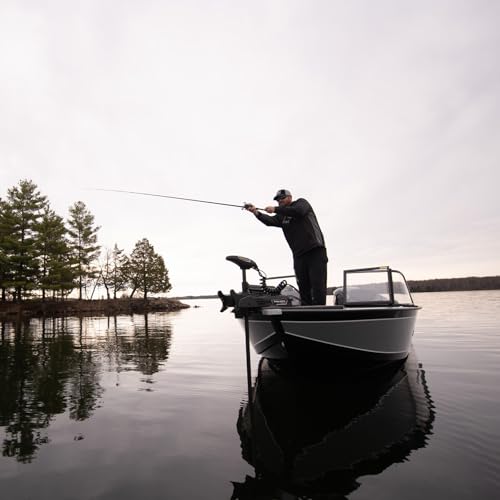
A bow mount bolts to the front deck and pulls the boat. You steer it with a foot pedal or remote while you stand and cast, which suits bass boats, larger aluminum boats, and any hull where one angler works the water from the front. GPS position hold is most common on electric-steer bow mounts, though not exclusive to them. If you sit at the stern and fish small water, start with a transom motor. If you fish standing on a front deck, a bow mount is usually worth the extra installation work.
This guide is general product information, not repair or electrical safety advice. Follow the installation, wiring, and charging instructions in your product’s manual, stop using any battery, charger, or electronics that overheat, swell, or smell of burning, and contact the manufacturer.
The Two Example Motors
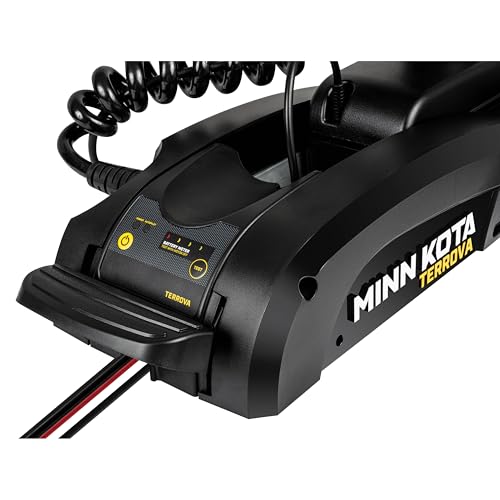
We picked one motor of each style from the same maker: the Minn Kota Endura C2 30 (transom, tiller steer) and the Minn Kota Terrova 55 (bow, wireless remote, GPS). They also differ in thrust, features, and weight, so treat them as examples of each design, not a like-for-like comparison or a ranking. Figures for these two motors come from the Amazon listings, checked against Minn Kota’s help center pages for the Endura and Terrova, which list both as current models. The score on each card is its AnglerTechLab Score, calculated with the published method on our How We Review page.
We earn a commission from qualifying purchases made through links on this page. Commissions never affect our rankings or AnglerTechLab Scores.

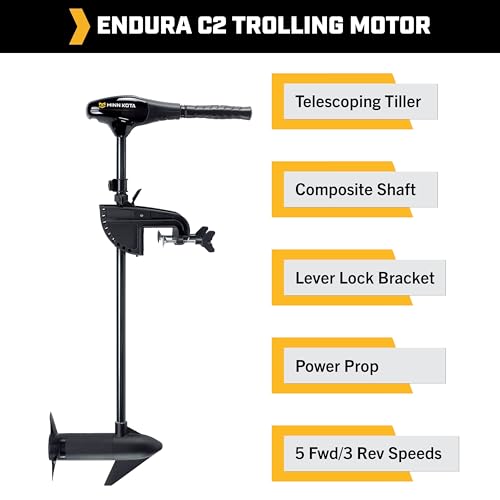
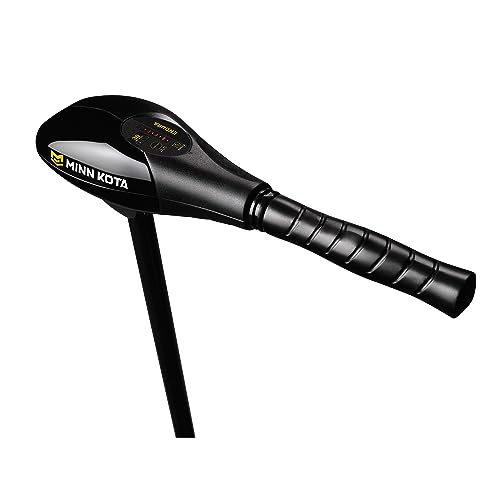
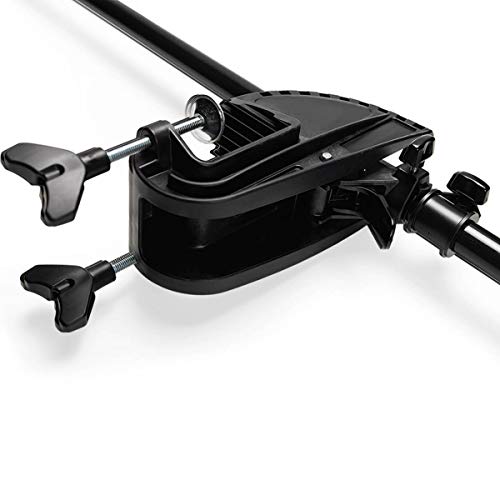
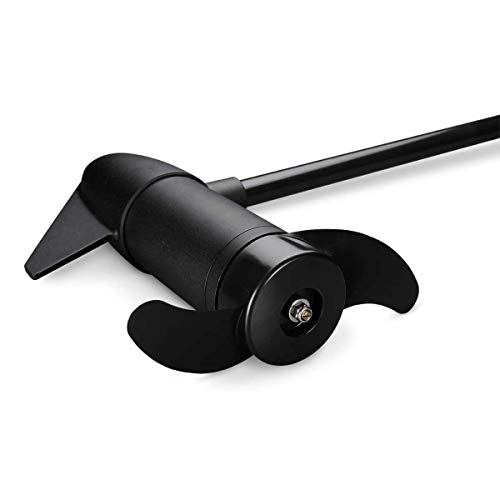
Minn Kota Endura C2 30 Transom-Mount Trolling Motor



As an Amazon Associate I earn from qualifying purchases.

Minn Kota Terrova 55 Bow-Mount Trolling Motor with GPS


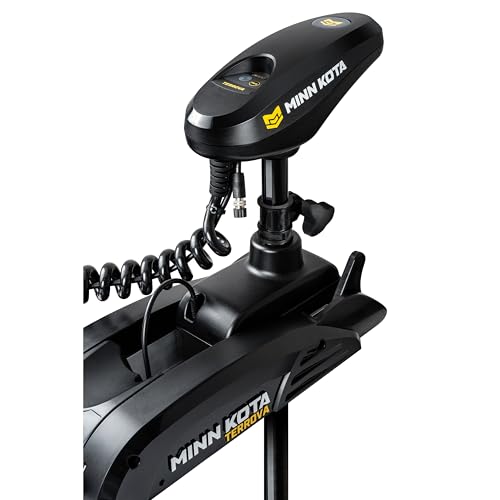
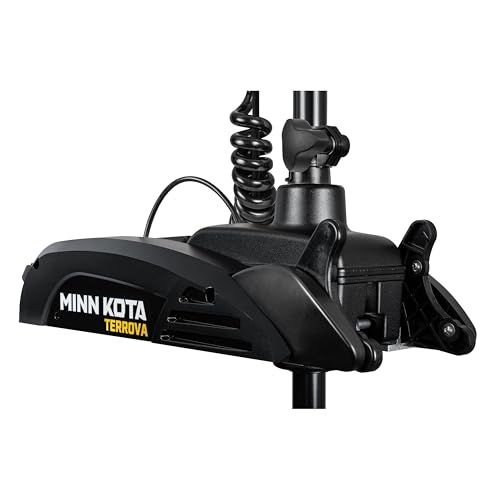
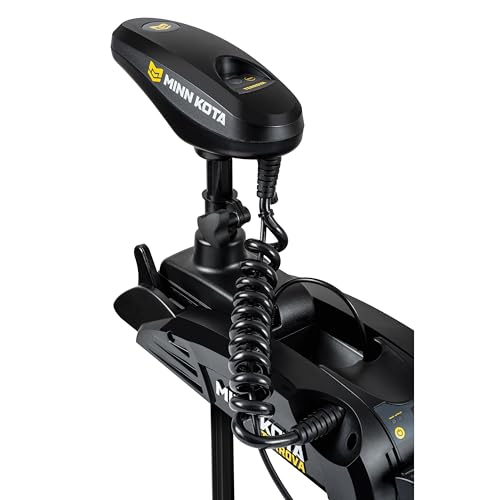
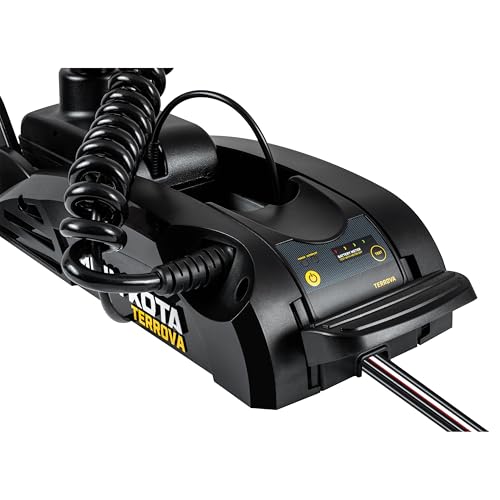
As an Amazon Associate I earn from qualifying purchases.
Bow Mount vs Transom Mount at a Glance
Sources: the Garmin Force installation instructions, Garmin’s guide to choosing a trolling motor, the Newport Kayak Series owner’s manual, Newport’s NV Series page, Newport’s buyer’s guide, and the two Amazon listings.
| Feature | Transom mount | Bow mount |
|---|---|---|
| Where it attaches | Clamps onto the transom with clamp screws (per the Newport manual) | Bolts through the front deck, near the centerline (per the Garmin Force instructions) |
| How it moves the boat | Pushes from the stern | Pulls from the bow |
| Typical steering | Tiller with twist-grip speed control on the examples here; some stern-mount kayak motors use a pedal or remote (Garmin Force Current) | Foot pedal or wireless remote |
| Drilling required | No, for a clamp-on transom | Yes; Garmin says to verify the deck can take the motor’s weight and force |
| GPS position hold | Not named in the Endura C2 30 listing or on Newport’s NV Series page; some stern-mount kayak motors have it (Garmin Force Current) | Anchor lock on the Garmin Force; Spot-Lock on the Terrova 55, per the listing |
| Example shaft length | 30 in (Endura C2 30, per the listing); 30 or 36 in across Newport’s NV Series | 54 in (Terrova 55, per the listing); 50 in or 57 in for the Garmin Force Pro, per Garmin’s guide |
| Example weight | 17 lb (Endura C2 30, per the listing) | 48.8 lb (Terrova 55, per the listing) |
| Example voltage | 12 V (Endura C2 30, per the listing) | 12 V (Terrova 55, per the listing); 24 or 36 V for the Garmin Force |
Where Each One Sits and How It Moves the Boat
A transom motor hangs off the back of the boat, right where you sit to run it. It pushes the hull, so the stern goes where the motor points and the bow follows. That is easy to manage on a 12 ft jon boat in a calm cove.
A bow mount does the opposite: it sits up front and pulls the hull behind it, a bit like towing a wagon by the handle. Steering from the front lets you point the bow along a weed edge or a dock line while you cast. Newport makes this point for pontoons in its guide to mounting a pontoon trolling motor: “Operating the trolling motor from the stern does give you better control, but not as well as a bow mounted motor.”
A third, less common style attaches to the outboard’s lower unit; see what is a trolling motor for how it compares.
Hands Free or Hands On: How Each Mount Is Steered
The transom motors in this comparison are tiller steered, which keeps one hand on the motor. Newport’s NV Series page lists a “6” telescoping handle” and “5 forward + 3 reverse speeds,” and the Endura C2 30 listing describes the same kind of tiller and speed range. Bow mounts free both hands: cable-steer models use a foot pedal, and electric-steer models add a wireless remote, as on the Garmin Force and, per its listing, the Terrova 55. The split is not absolute. Garmin’s guide says its Force Current, a kayak motor that mounts on the stern, works with “power steer foot pedals or wireless floating handheld remote.” Day-to-day handling of each control type is covered in our guide on how to use a trolling motor.
Boat Size and Who Fishes From Where
- Kayaks and canoes: transom-style motors on a stern or side mount made for the hull, since these boats typically have no front deck that can take a bolt-down bow mount. The steps are in how to install a trolling motor on a kayak.
- Jon boats, small aluminum boats, inflatables: a transom motor is the default. The Endura C2 30 listing names inflatable boats among its recommended uses.
- Bass boats and larger aluminum boats with a casting deck: a bow mount, because the angler on the front deck controls the boat while fishing.
- Pontoons: Newport says a bow-mounted motor gives better control and that its Pontoon Series comes ready for bow mounting with a deck mount, per its guide to choosing a trolling motor.
Mount type does not settle how much thrust your boat needs; that is covered in what size trolling motor do I need.
Shaft Length Works Differently on Each Mount
A bow deck usually sits higher above the water than a transom, so bow mounts come with much longer shafts. On the transom side, Newport’s buyer’s guide says “For the vast majority of boats, a 30” or 36” shaft will fit their hull well,” and its NV Series page lists 30 in shafts for the 36, 46, and 55 lb models and 36 in for the 62 and 86 lb models. On the bow side, Garmin’s guide lists 50 in and 57 in shaft options for its Force Pro. The two example motors show the same spread: 30 in for the Endura C2 30 and 54 in for the Terrova 55, per their listings. The measuring steps for each mount are in our guide on how to measure trolling motor shaft length.
GPS Anchoring Is Mostly Found on Bow Mounts
Holding a spot without dropping an anchor is where bow mounts and tiller-steer transom motors differ most. The Garmin Force owner’s manual describes anchor lock as a GPS autopilot function, and the Terrova 55 listing describes Spot-Lock, which it says maintains position and lets you move the locked spot 5 feet in any direction, plus drift, follow, and dodge modes. Neither the Endura C2 30 listing nor Newport’s NV Series page mentions GPS.
GPS position hold is not exclusive to bow mounts, though. Garmin’s guide says the stern-mount Force Current lets you “enable your smart anchor lock” when you reach a fishing spot. For a tiller-steer transom motor on a jon boat, plan on a physical anchor.
Installation Work and Cost of Ownership
A transom motor goes on in minutes. Newport’s manual has you snug the clamp screws, set the depth with the collar to the recommended 6 to 12 in below the waterline, and then tighten the screws, without over-tightening the bracket on the fiberglass shaft.
A bow mount is a project: the Garmin Force instructions call for bolting through the deck, checking that the deck can take the motor’s weight and force, and installation by a qualified marine installer. Some owners also add a bracket so the motor can come off the deck; our Minn Kota quick release bracket roundup covers which fits which motor family. In cost terms, a transom setup is mostly the motor and battery, while a bow setup can add hardware, a bracket, longer power runs to the front deck, and installer time. Battery sizing works the same way for both (see what size battery for trolling motor), and the 12V vs 24V trolling motor comparison covers voltage.
Who Should Skip Each Style
Skip a bow mount if your boat has no solid front deck, you fish from the rear seat, you move the motor between boats, or you do not want to drill.
A transom mount isn’t for you if you fish standing on a casting deck and need both hands free most of the day. Running a tiller from the back while casting from the front does not work for one angler.
Which Should You Buy?
- Kayak, canoe, or inflatable: a transom-style motor such as the Endura C2 30, on a mount made for the hull.
- Jon boat or small aluminum boat, fishing from the back seat: a clamp-on, tiller-steer transom motor.
- Bass boat with a casting deck: a bow mount with a foot pedal or remote, such as the Terrova 55.
- You want GPS position hold: look at electric-steer motors, most of which are bow mounts; on a kayak, a stern-mount model with anchor lock such as the Garmin Force Current.
Browse the trolling motors section for related guides.
Why You Should Trust Us
We do not conduct our own product trials. This comparison draws on Garmin’s and Newport’s manuals, guides, and product pages, which we opened and read, and on the Amazon listings for the two Minn Kota example motors; we checked those figures against Minn Kota’s help center pages. Each AnglerTechLab Score starts from Amazon owner ratings using the published method, and we made no editorial adjustment to either score. We earn a commission from qualifying purchases, and commissions never affect our recommendations or scores. The full method is on our How We Review page.
Frequently Asked Questions
How do you mount a transom trolling motor on the bow?
It depends on the motor, and it is a modification, not a setting. Newport’s trolling motor FAQ says the control head and propeller “cannot each be rotated independently and oriented to allow immediate bow mounting,” but that its NV and L Series motors can be modified for bow use, and it points to its Transom To Bow Mount Guide. That guide says the customer takes responsibility for any damage from the modification and that such damage is not covered under warranty. Newport’s Kayak Series manual, for its part, says not to modify that unit. If your motor’s maker publishes no conversion steps, do not improvise; ask the maker or buy a bow-mount motor.
Can a bow mount trolling motor go on the transom?
Not a deck-mounted design like the Garmin Force: its installation instructions state, “You must install the motor on the bow of your boat.” Bow mounts are built around a deck base, a stow-and-deploy mechanism, and a long shaft sized for bow height, none of which suit a transom. If you want the motor at the stern, buy a transom model.
Is a bow mount better than a transom mount?
Only for the right boat. A bow mount gives more control to an angler on a front deck. A transom mount is lighter, clamps on without drilling, and is the practical choice for small boats fished from the back.
Do transom trolling motors have GPS anchoring?
Not the tiller-steer models here: neither the Endura C2 30 listing nor Newport’s NV Series page mentions GPS. Some stern-mount kayak motors do: Garmin’s guide describes smart anchor lock on its Force Current.
About the author

Brent Curtis enjoys chasing largemouth bass on Alabama lakes, especially around submerged structures and weed beds. He uses side-imaging fish finders and GPS trolling motors to locate fish, hold his boat in position, and explore productive fishing spots.